Relics of the American West: 1850-1920 - ONLINE ONLY
Lot 2490:
Description
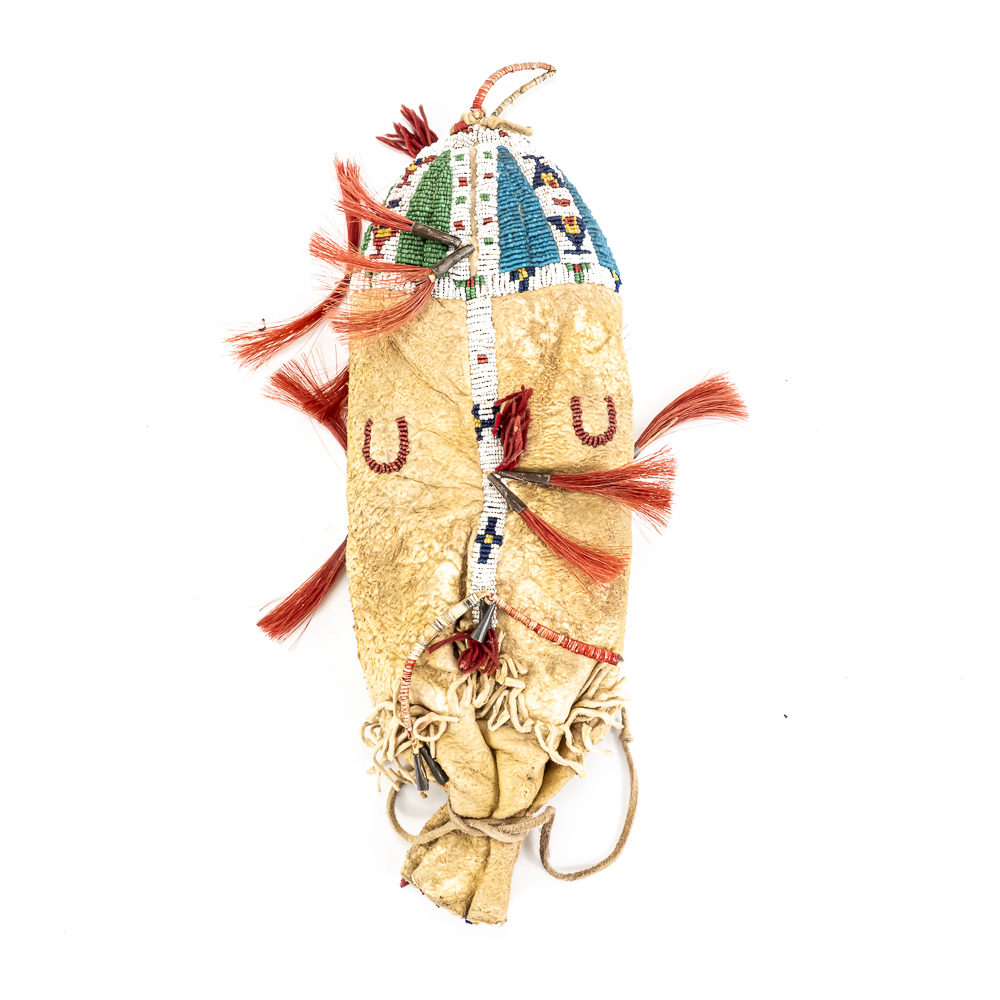
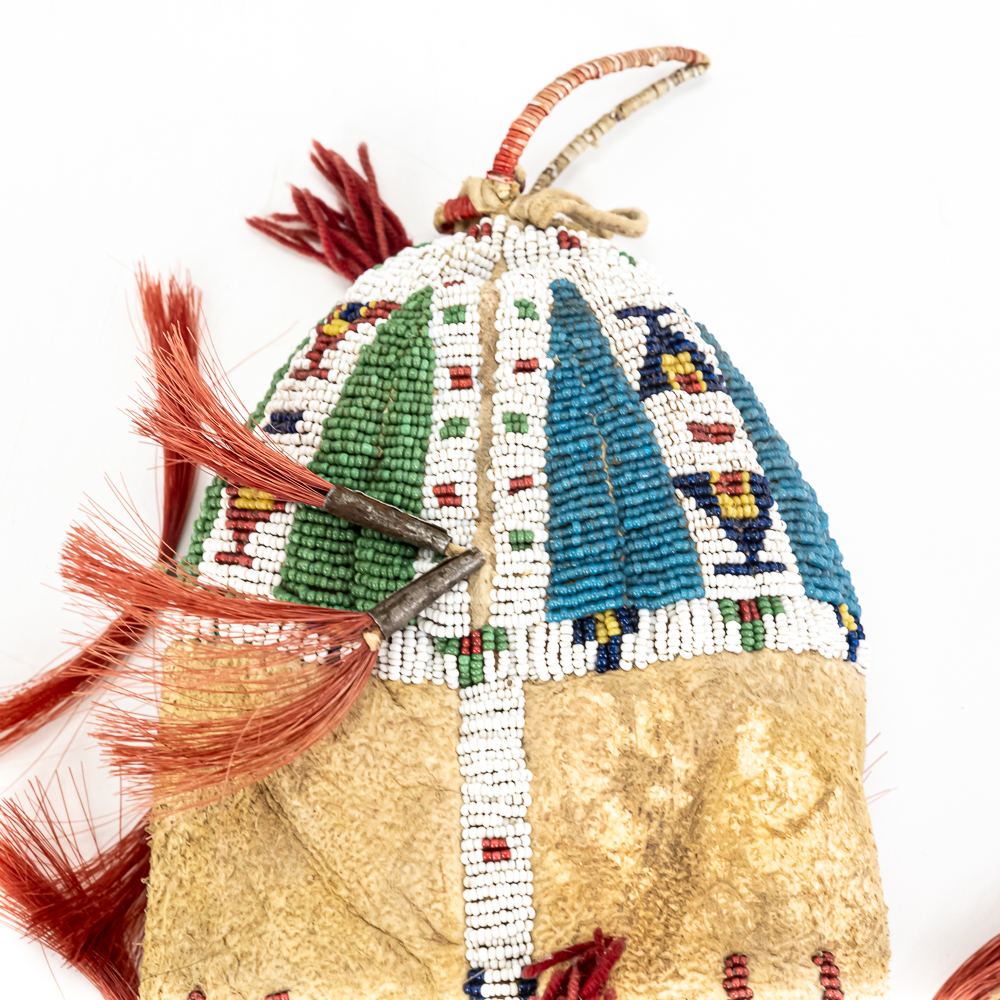
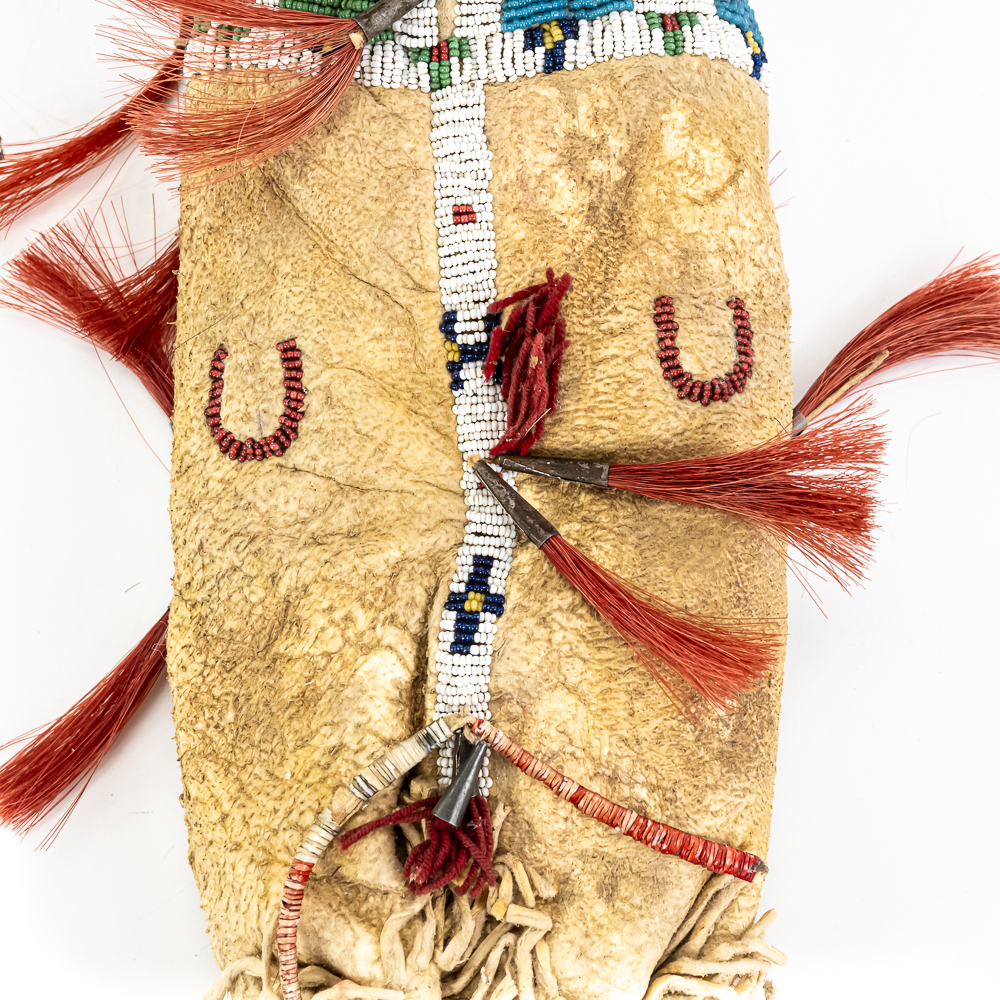
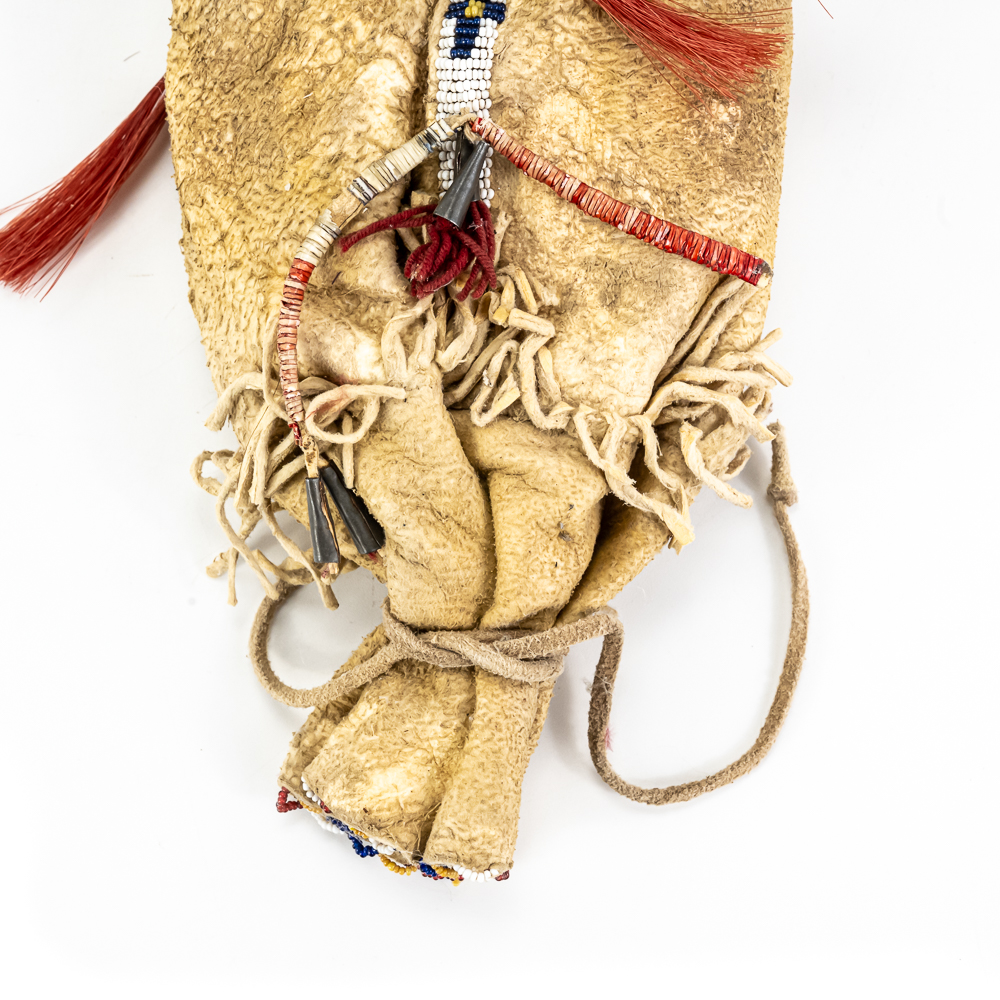
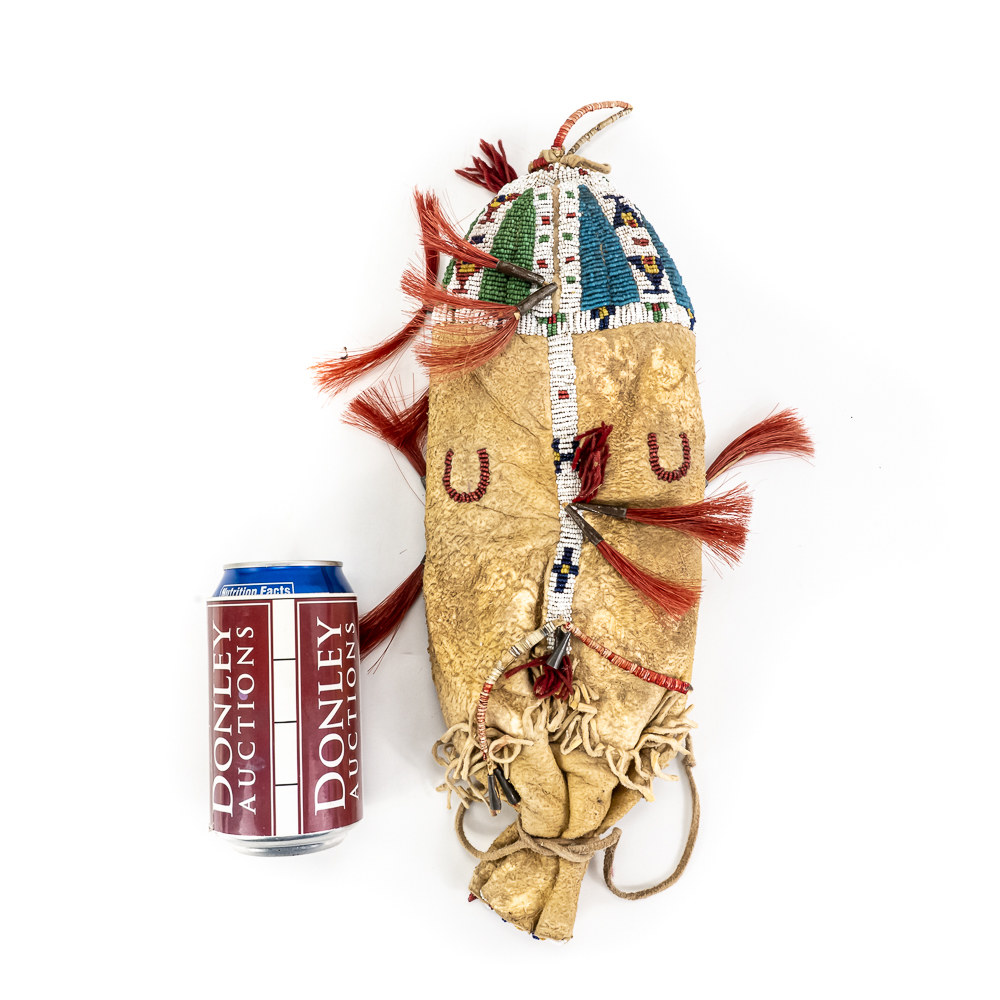
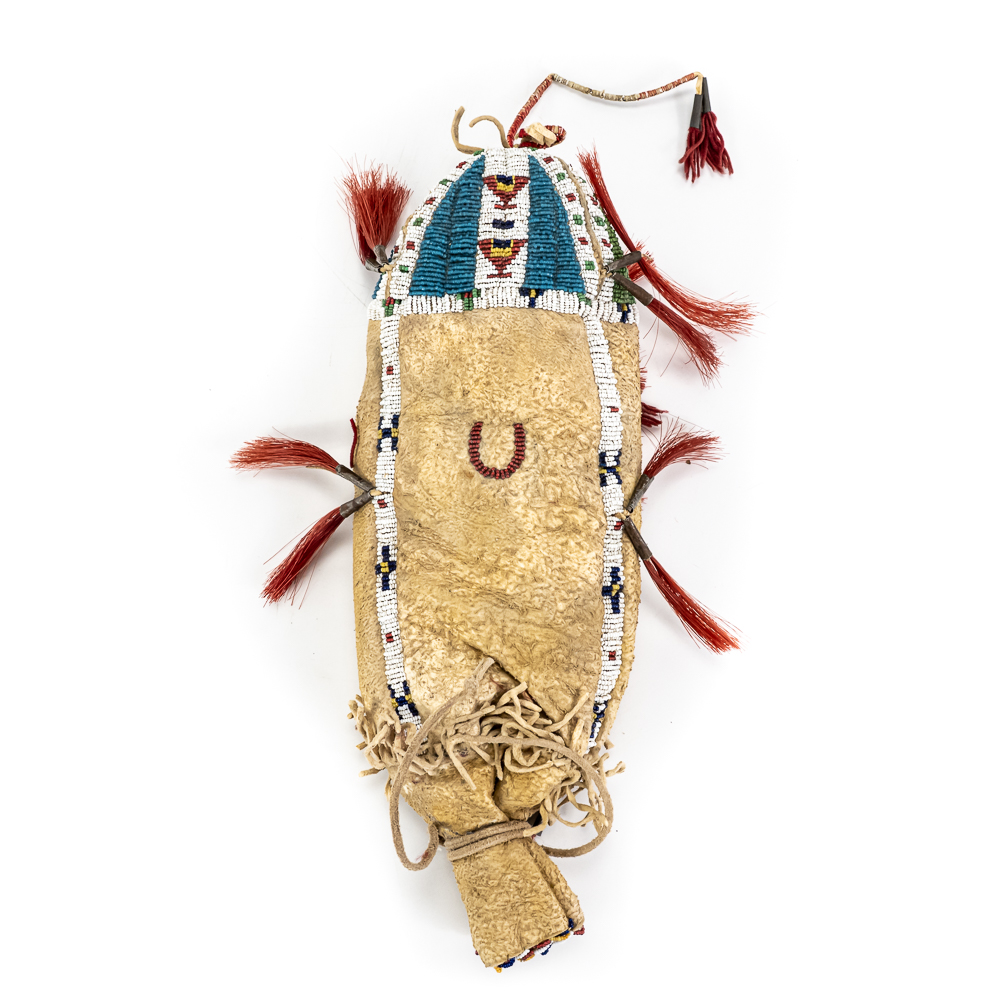
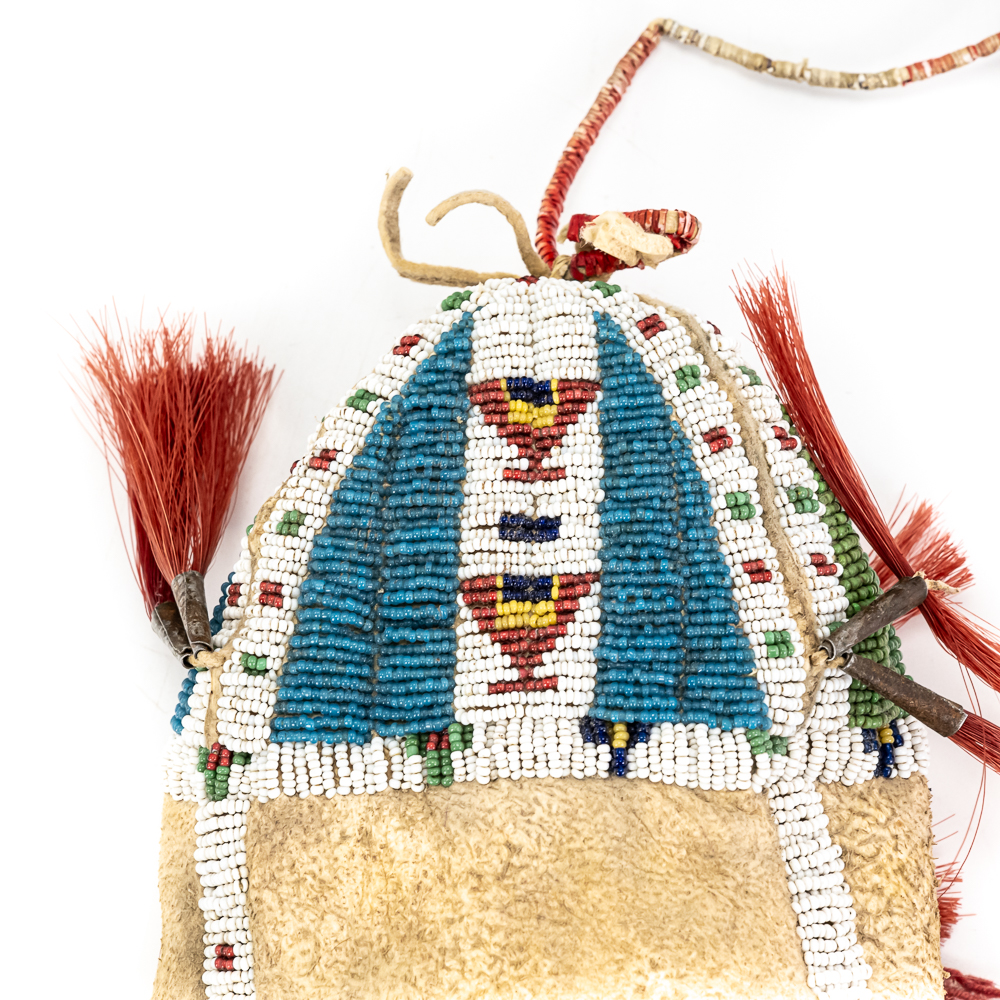
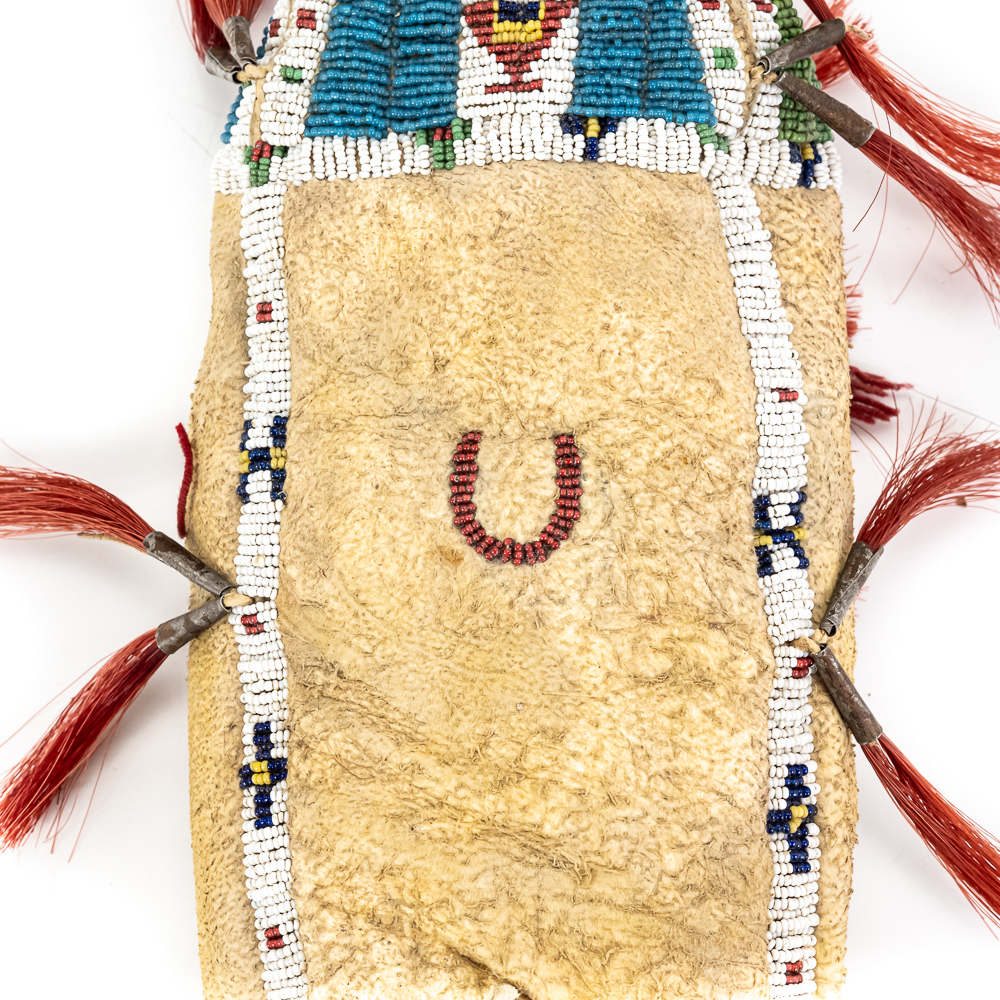
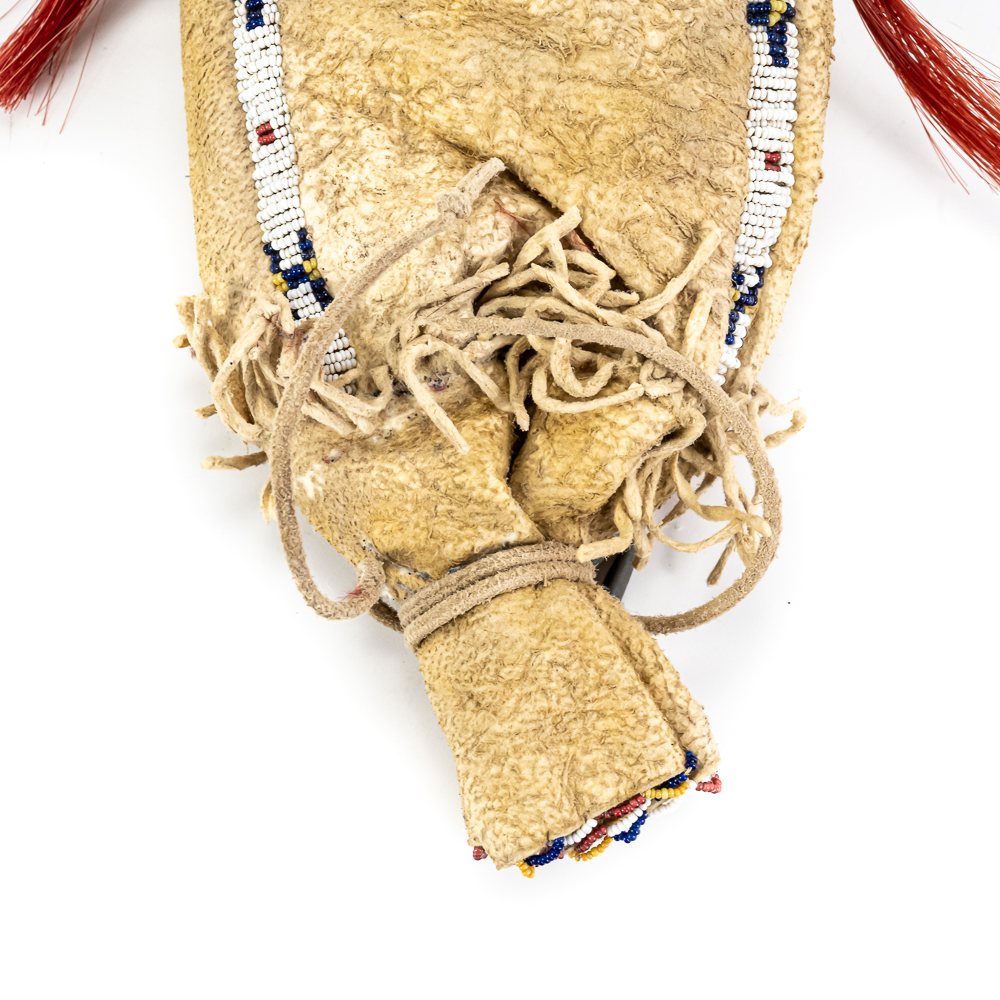
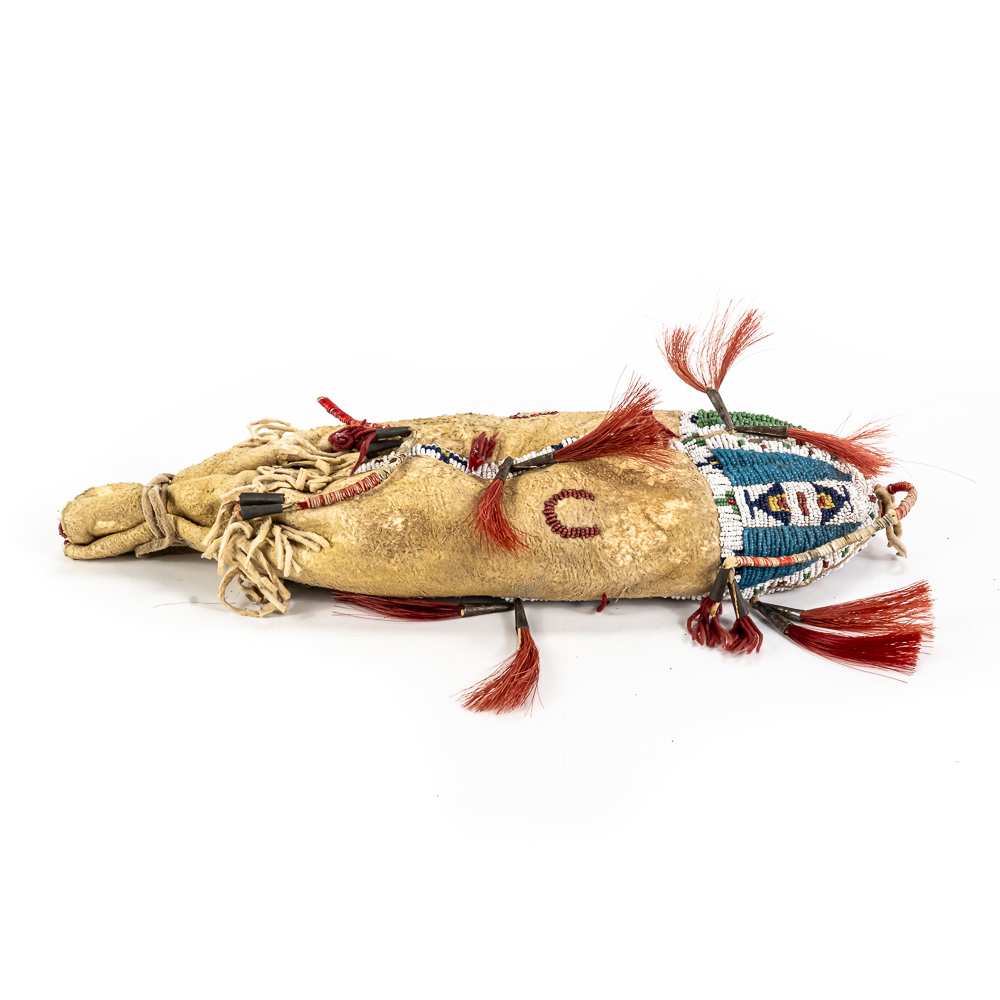
This striking Plains-style hide bag features intricate seed beadwork in vibrant blues, greens, and reds, accented by horseshoe motifs and tin cone “jingles.” While some accents appear to be traditional horsehair, certain tassels and detached elements are constructed from red yarn. The use of commercial yarn as a substitute for organic materials is a hallmark of the Reservation Era (circa 1880–1920). During this period, traditional resources became scarce, and artisans adapted by incorporating trade goods like yarn and aniline-dyed beads into their ceremonial regalia. The horseshoe motif—often interpreted as a symbol of the horse’s importance or a record of a successful raid—is rendered in a traditional lazy stitch (or “lane stitch”) technique, which creates the characteristic ribbed appearance seen in Sioux or Cheyenne craftsmanship. The specific color palette of this bag further supports a late 19th-century origin. The light “powder” blue background was a favorite among the Sioux (Lakota) and was often paired with “apple” or medium green and white-center red beads (often called “rose” or “shirley” reds). In Plains iconography, these colors carry deep spiritual meaning: blue often represents the sky or the heavens, while green signifies Mother Earth and the concept of growth or endurance. The item is a ceremonial “possible” bag, showing a high level of detail on the lower half, central spine, and the scalloped rim which is edged in multi-colored beads. It remains in good vintage condition with some expected darkening and stiffening of the hide; notably, a beaded yarn tassel strand has detached and is included in a separate plastic bag, and there is minor bead loss near the fringe. H 15.5″, W 5″, D 2″. Please see photos.
Share this lot: