Old West & Native American Auction
Lot 1238:
Description
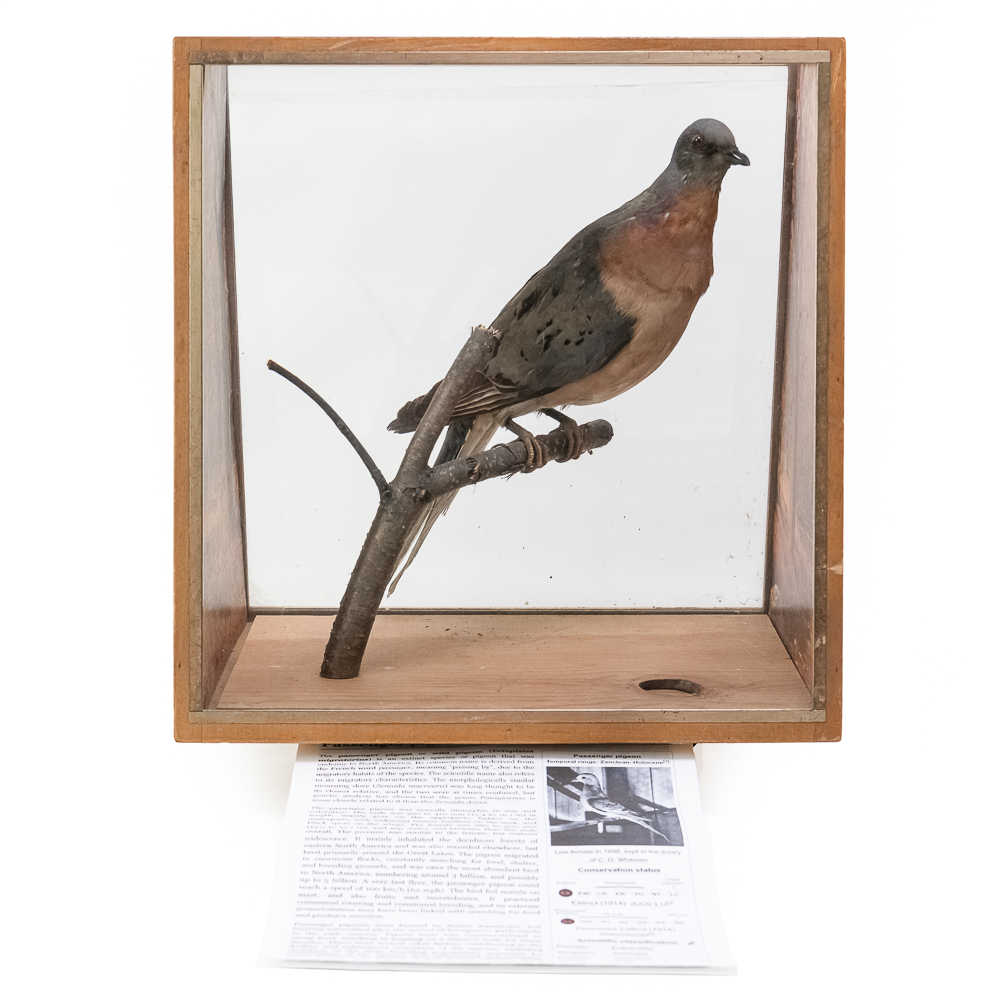
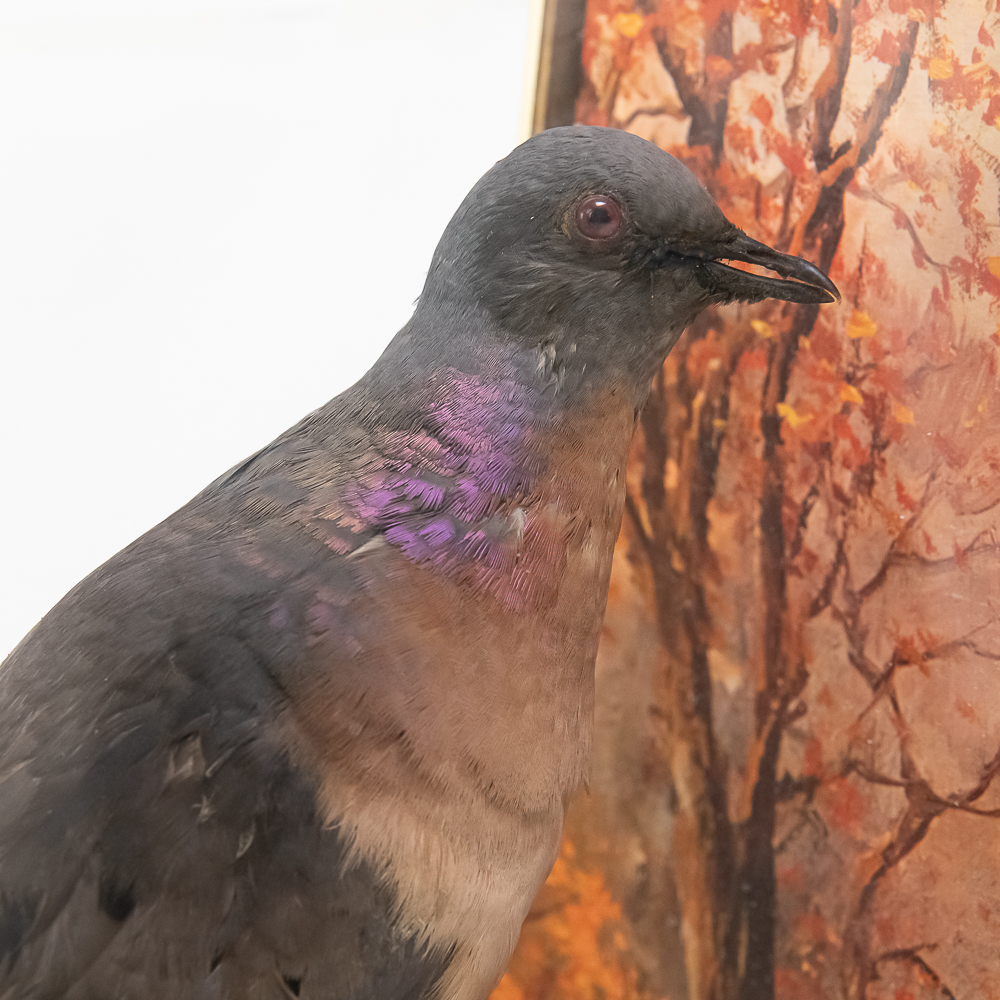
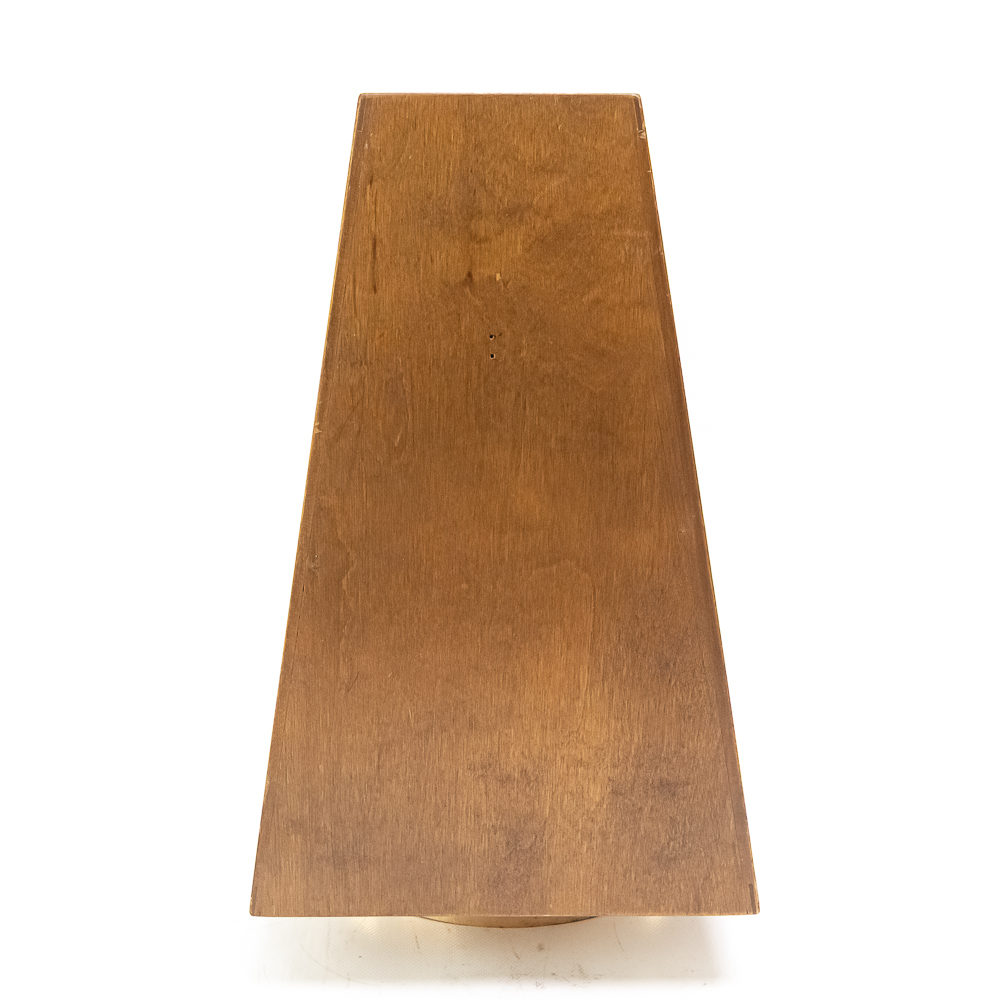
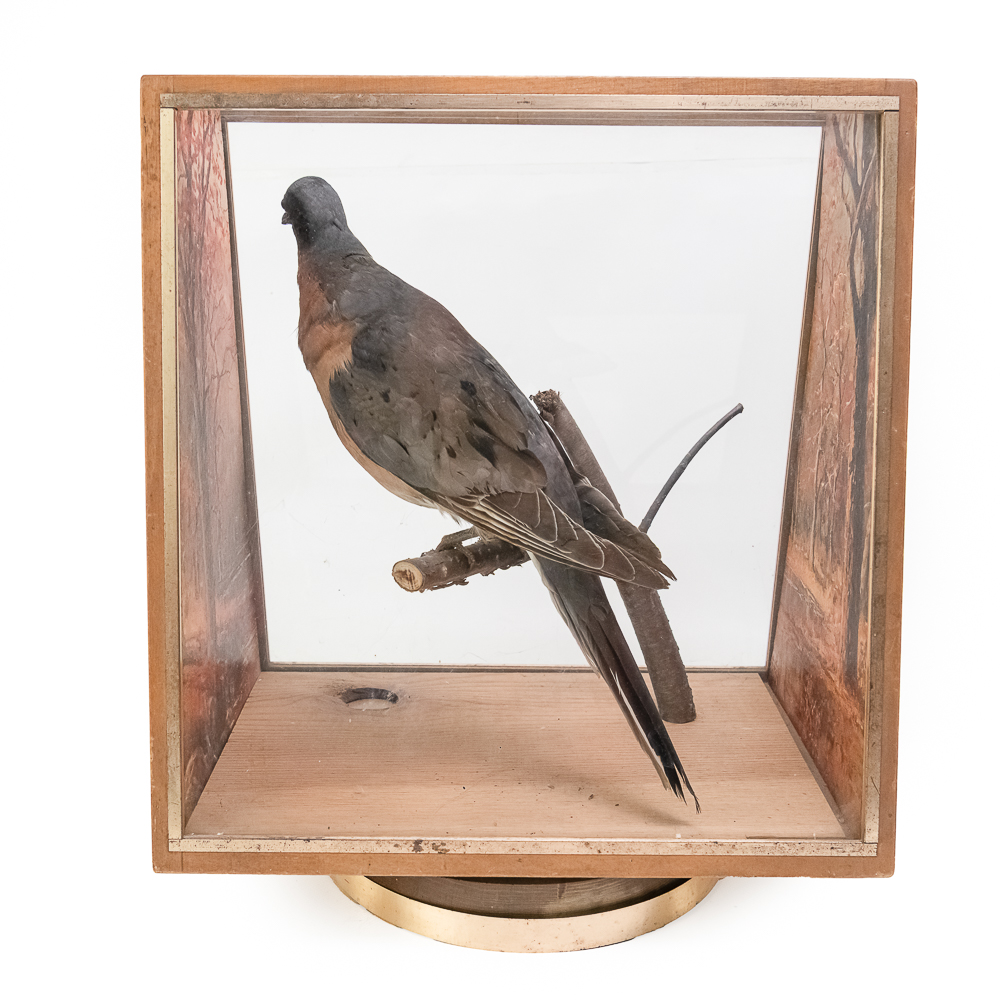
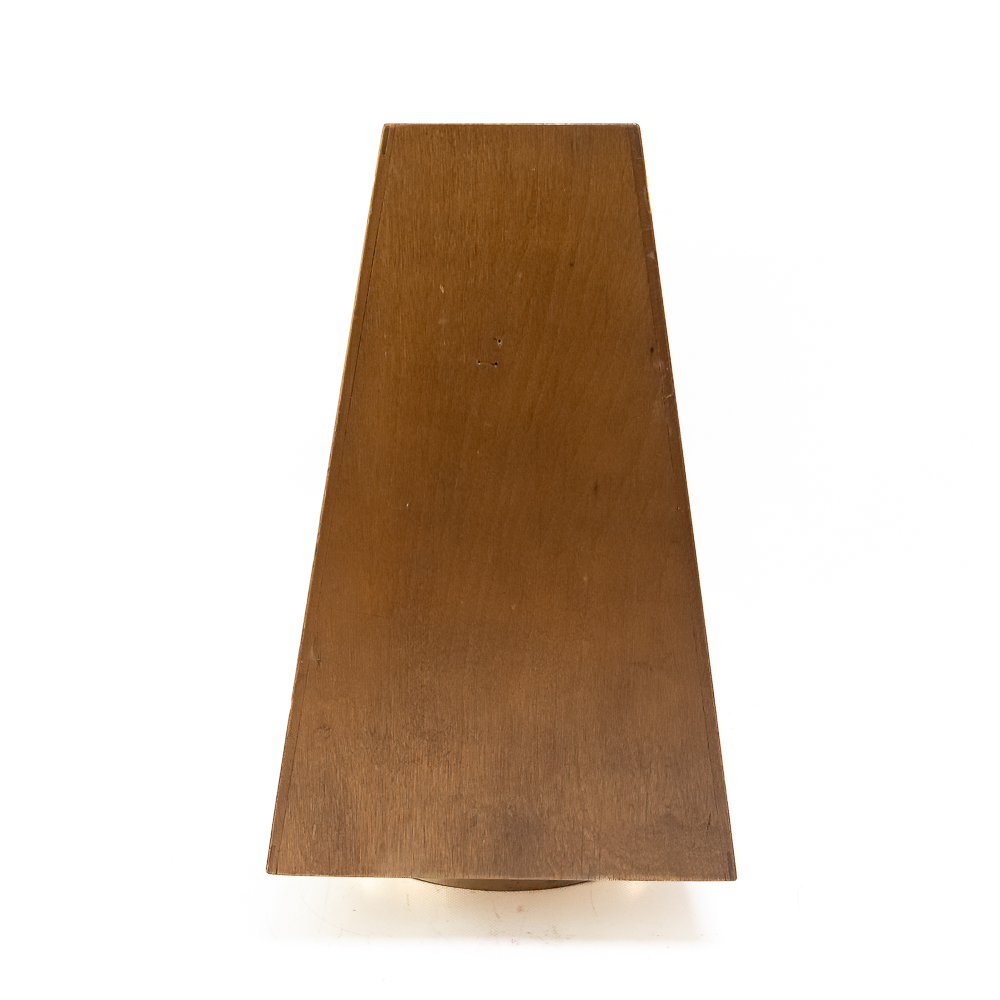
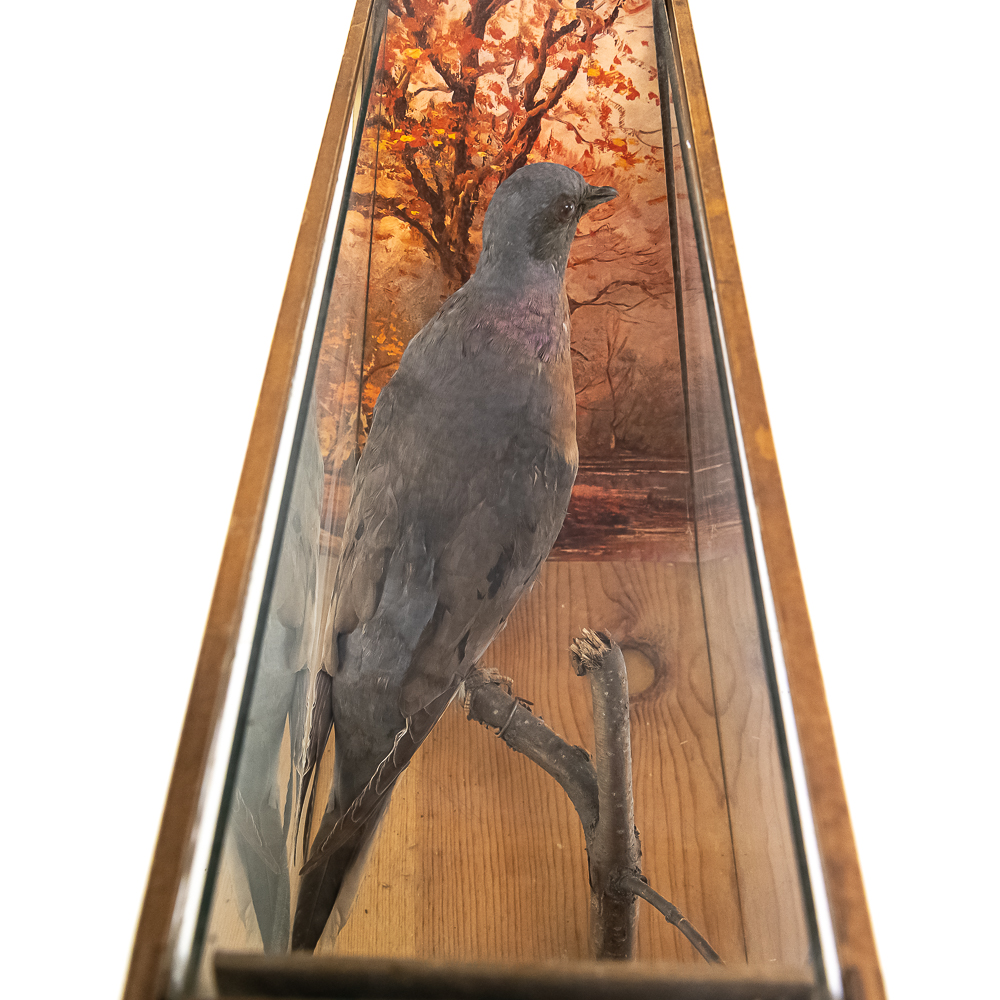
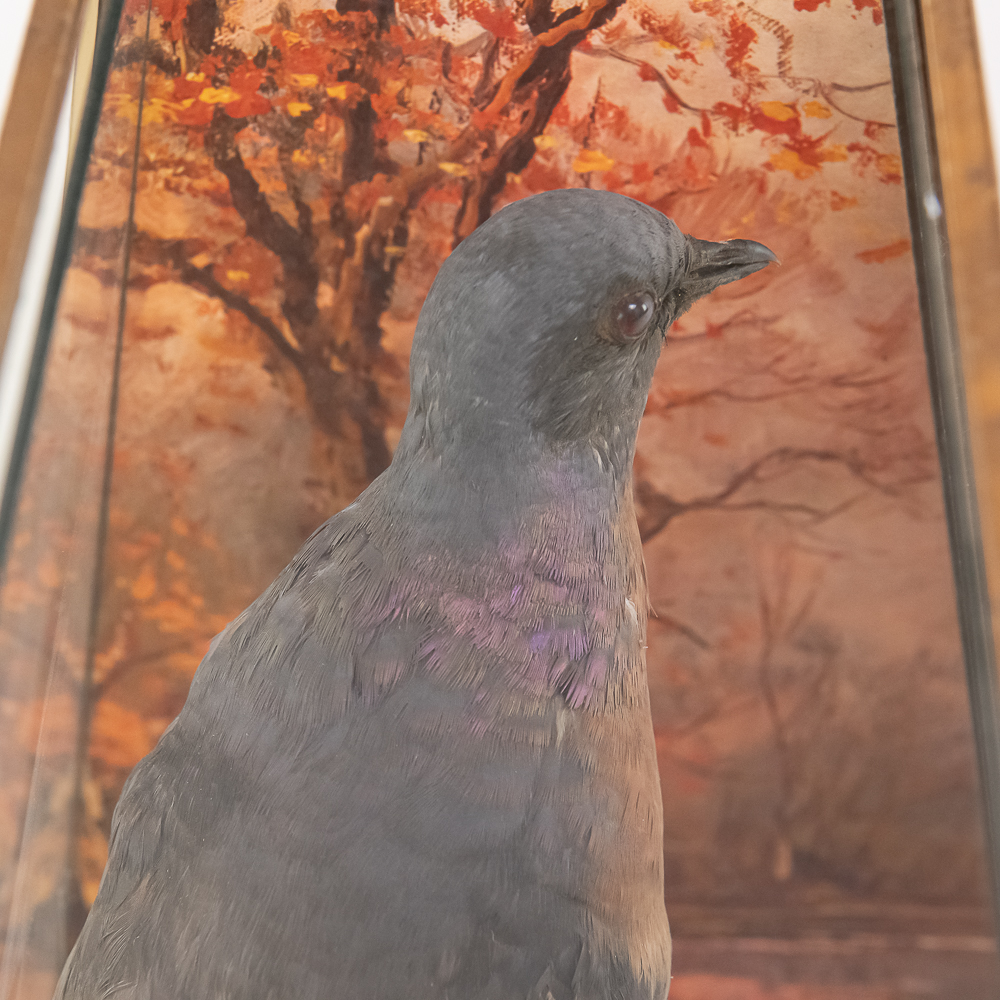
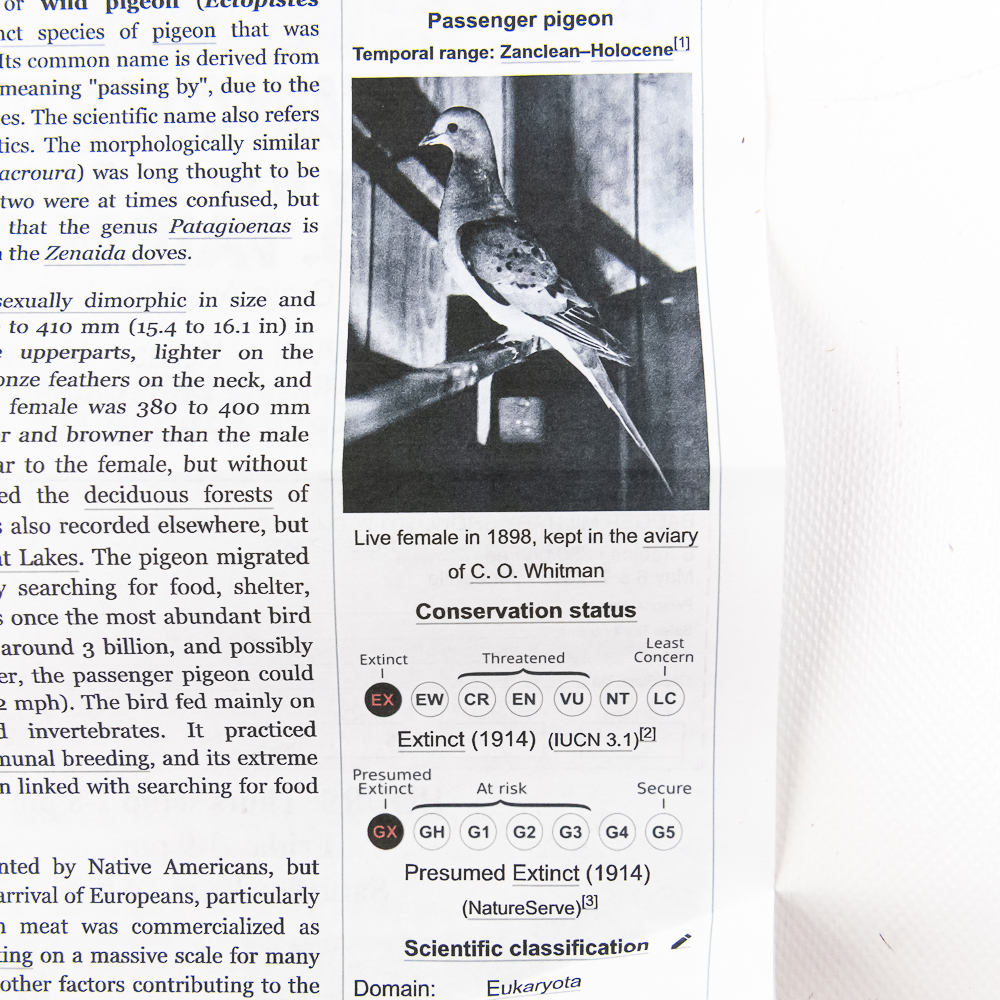
A profoundly significant piece of natural and North American history, a taxidermy specimen of a Passenger Pigeon. Getting its name from the French word “passager,” meaning “passing by”, due to its migratory habits, this bird was first hunted by Native Americans. By the 19th century, when more Europeans arrived in North America, hunting was intensified. Pigeon meat was commercialized as cheap food, resulting in hunting on a massive scale for many decades. By 1914, the Passenger Pigeon became extinct. The slender body, long tail, and distinctive slate-blue/black head with ruddy chest and breast coloration are consistent with a male Passenger Pigeon. The bird is mounted on a simple, dark branch perch and enclosed in a late 19th or early 20th-century wooden display case with glass sides and a simple wood base. The rear panel is lined with a pictorial backing of a wooded scene. The case style is simple and functional, designed to protect the specimen without elaborate internal diorama work. The top glass on the case is removable for maintenance of the bird/display. The case sits on a spinal which routes 360 degrees. The condition of the taxidermy bird itself appears to be good, and the perch and bird mounting stable. The glass case has minor scratches, and the wood frame shows age-appropriate wear. Due to the fragility of the bird and perch, it is highly recommended that the display be hand carried post auction. H 22″, W 14″, D 9.5″
Note: Pickup/Transport required. Contacts available post auction.
Share this lot: