The Allen Koenigsberg Phonograph Collection
Lot 3038:
Description
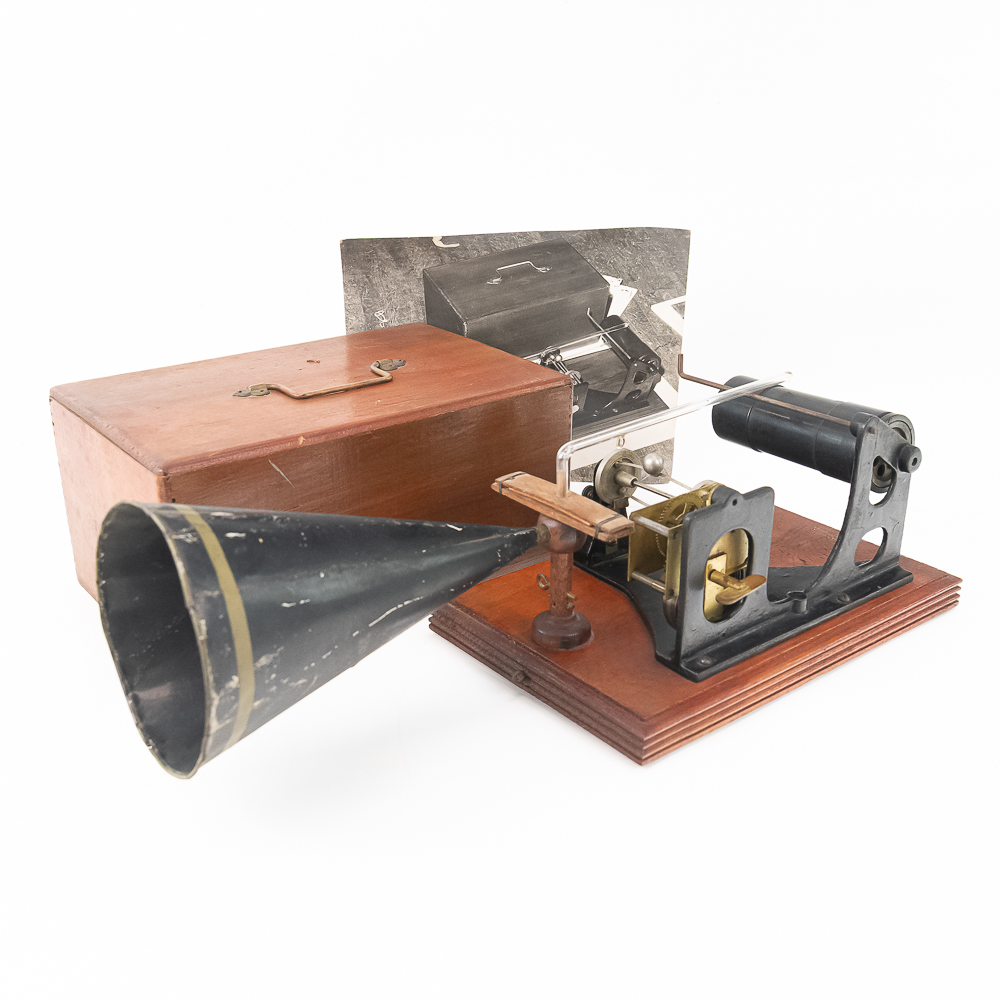
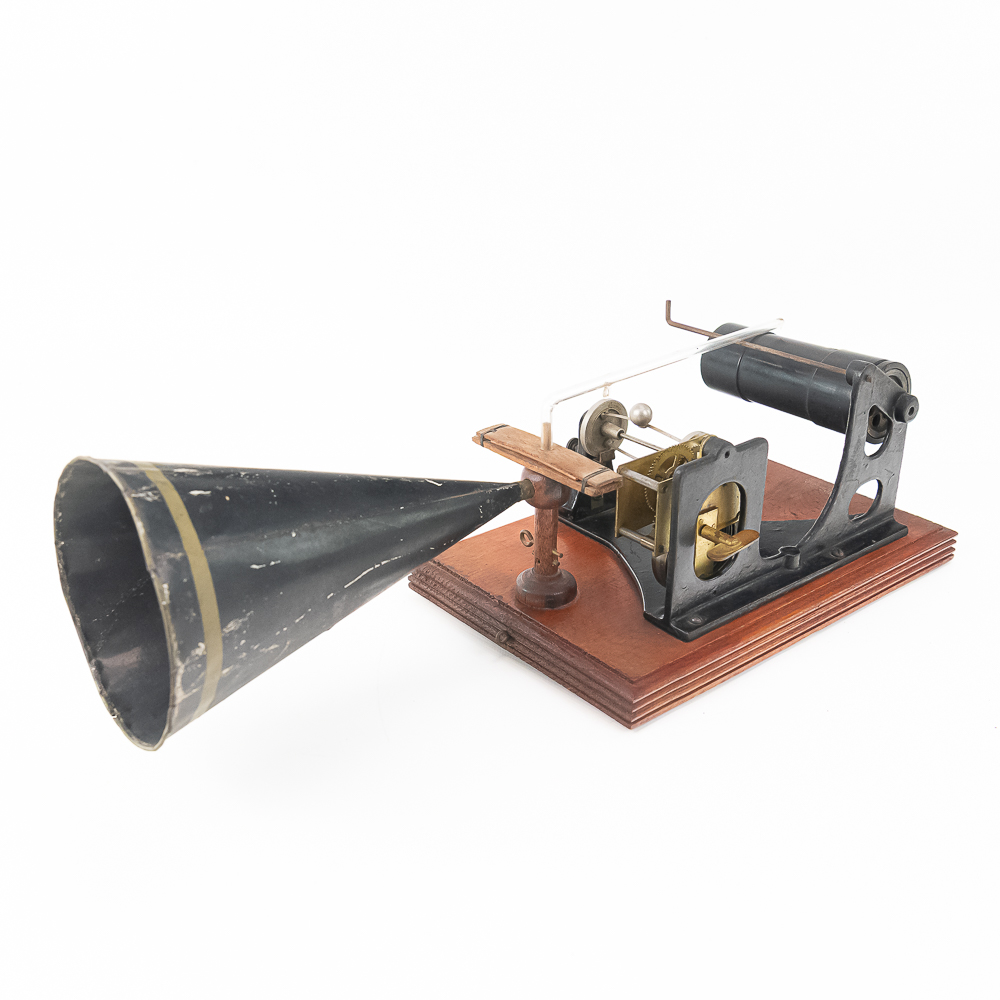
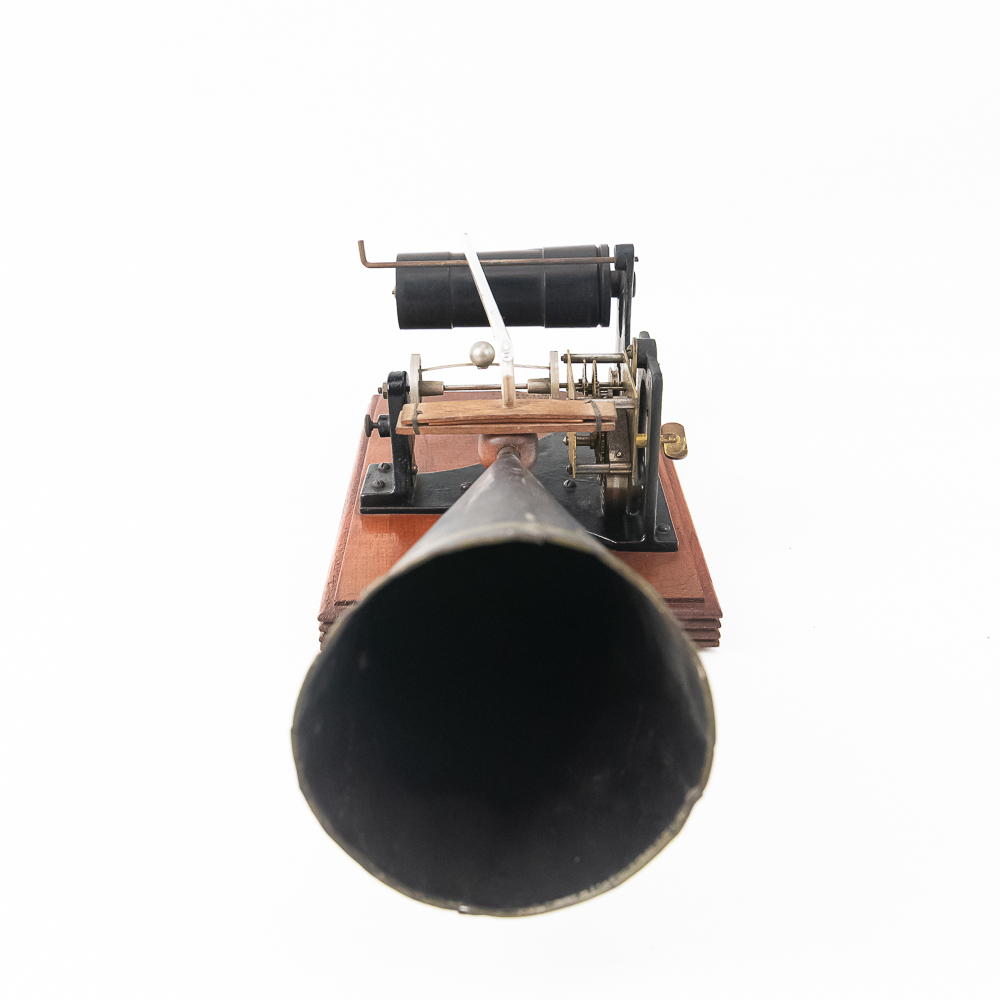
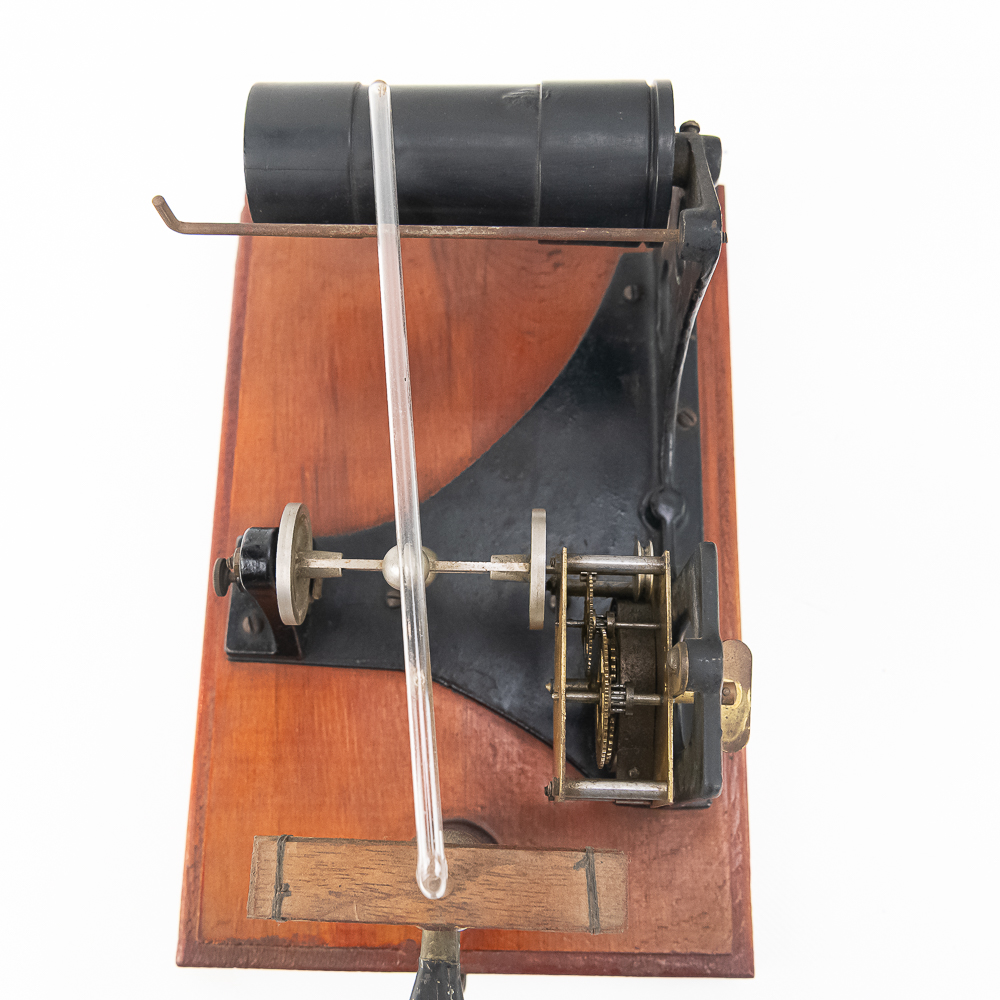
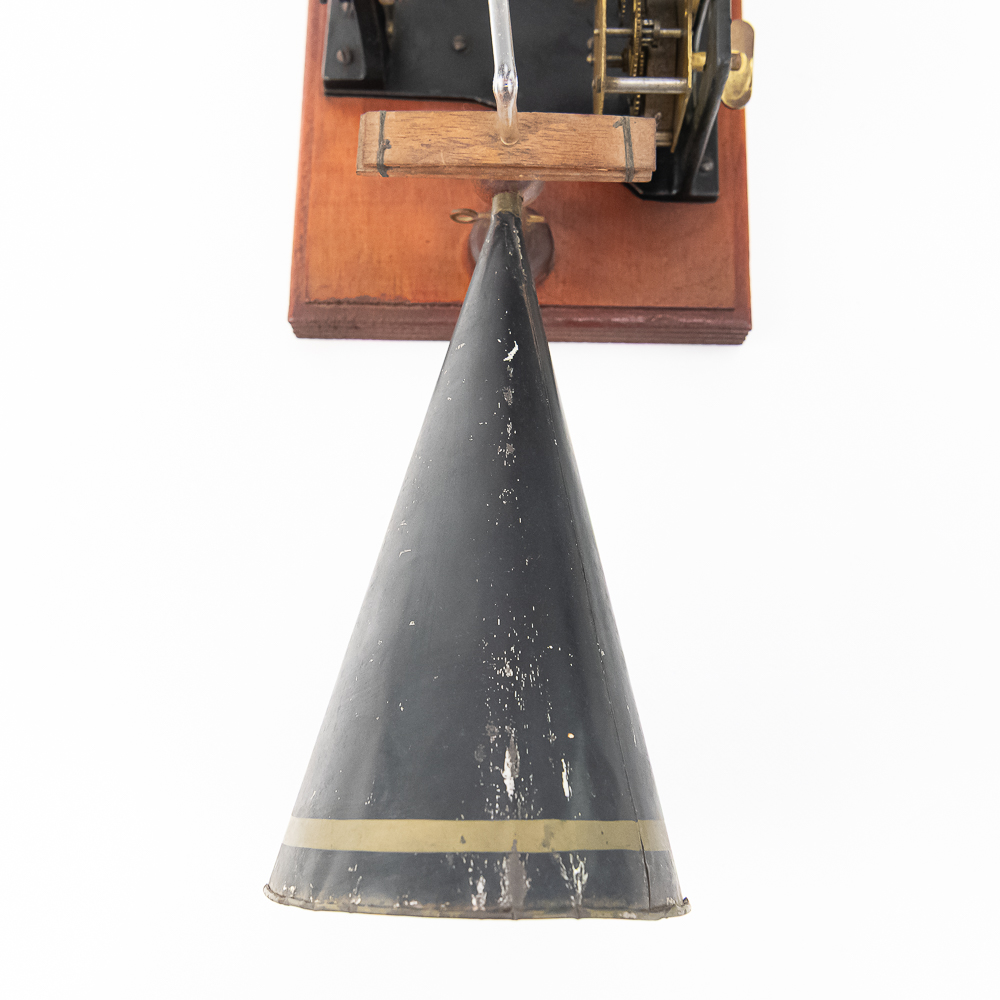
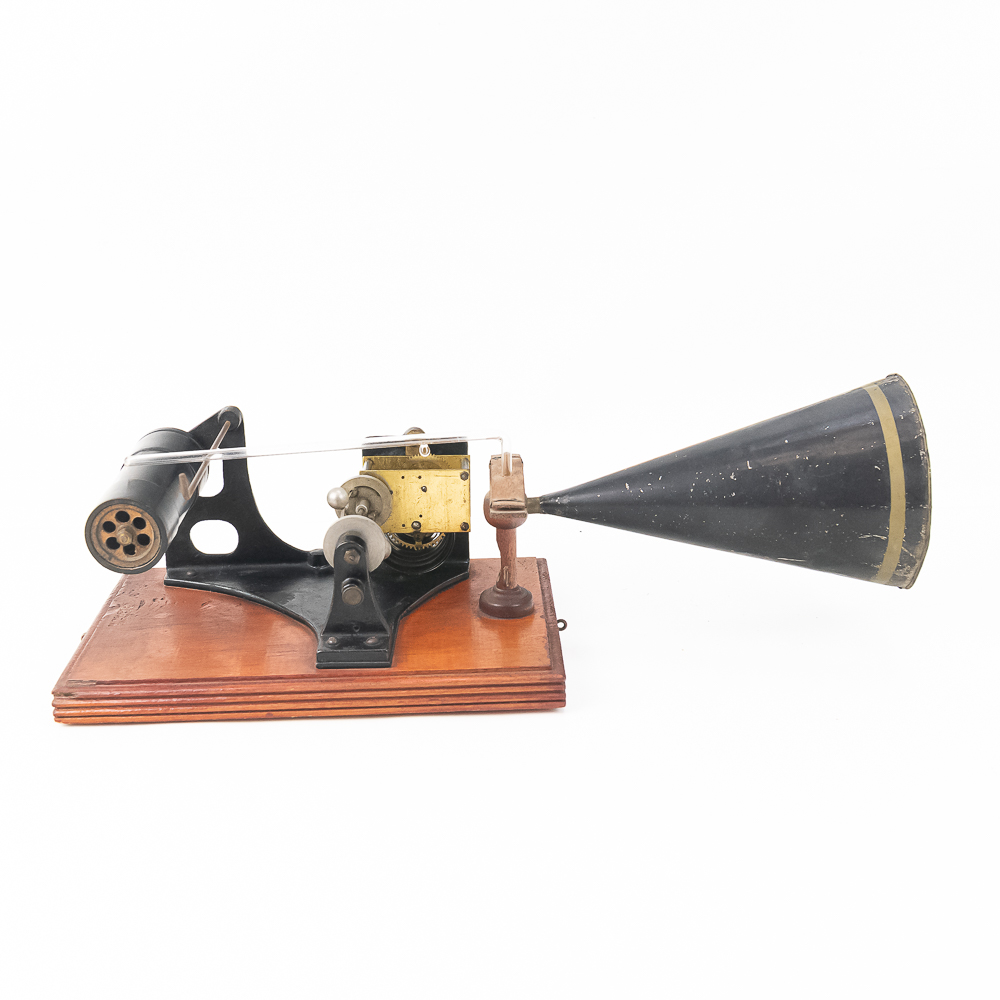
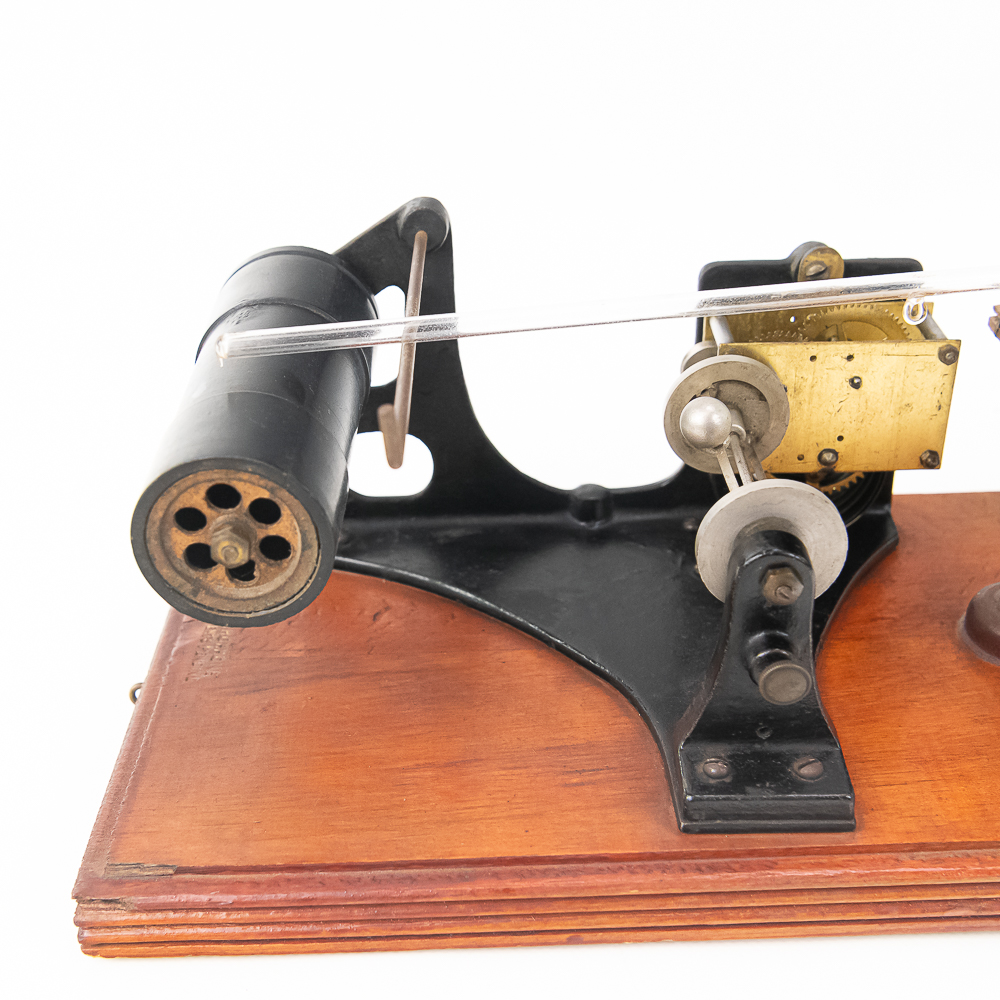
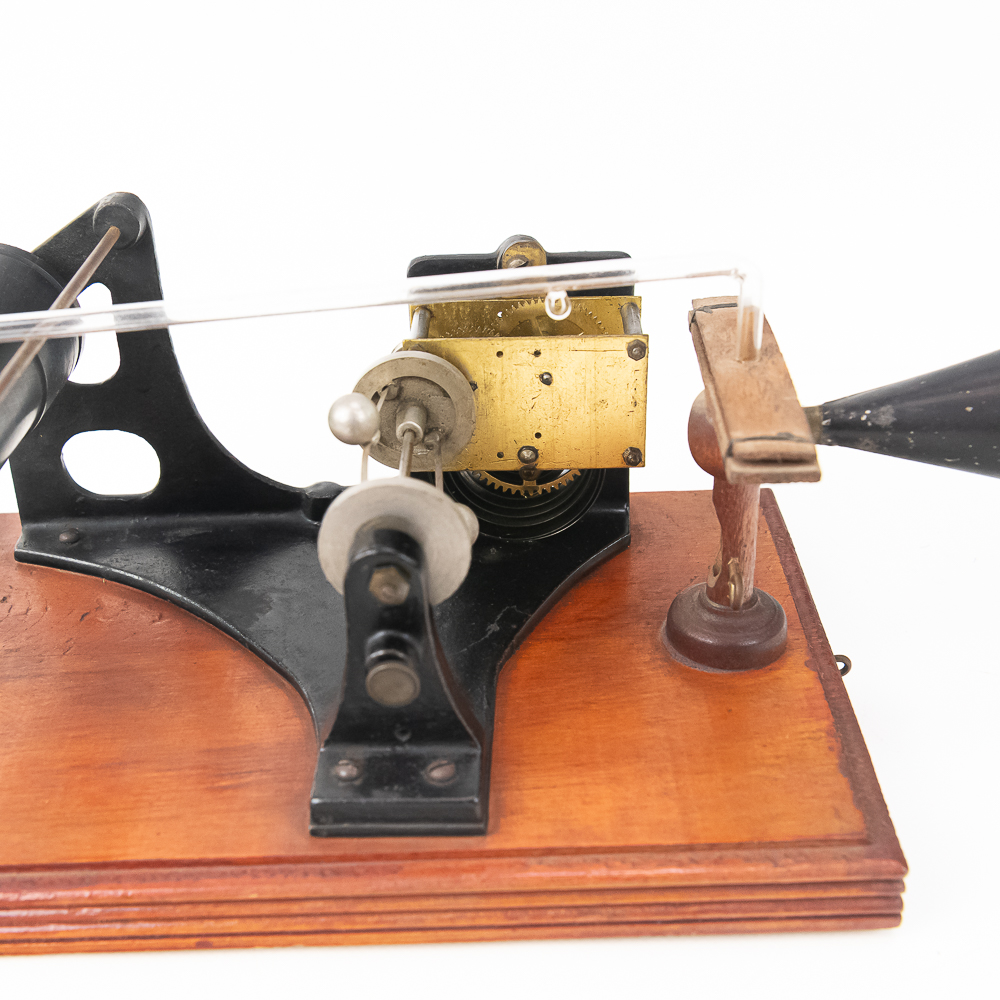
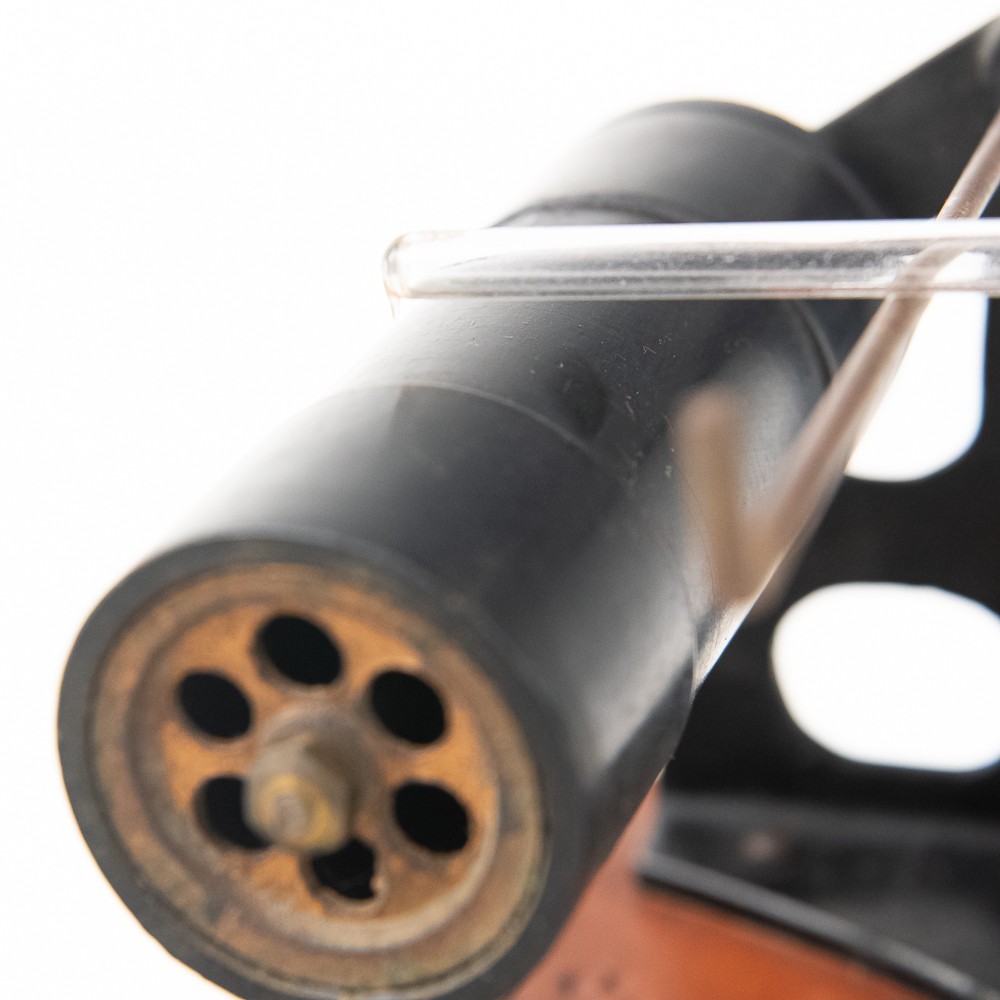
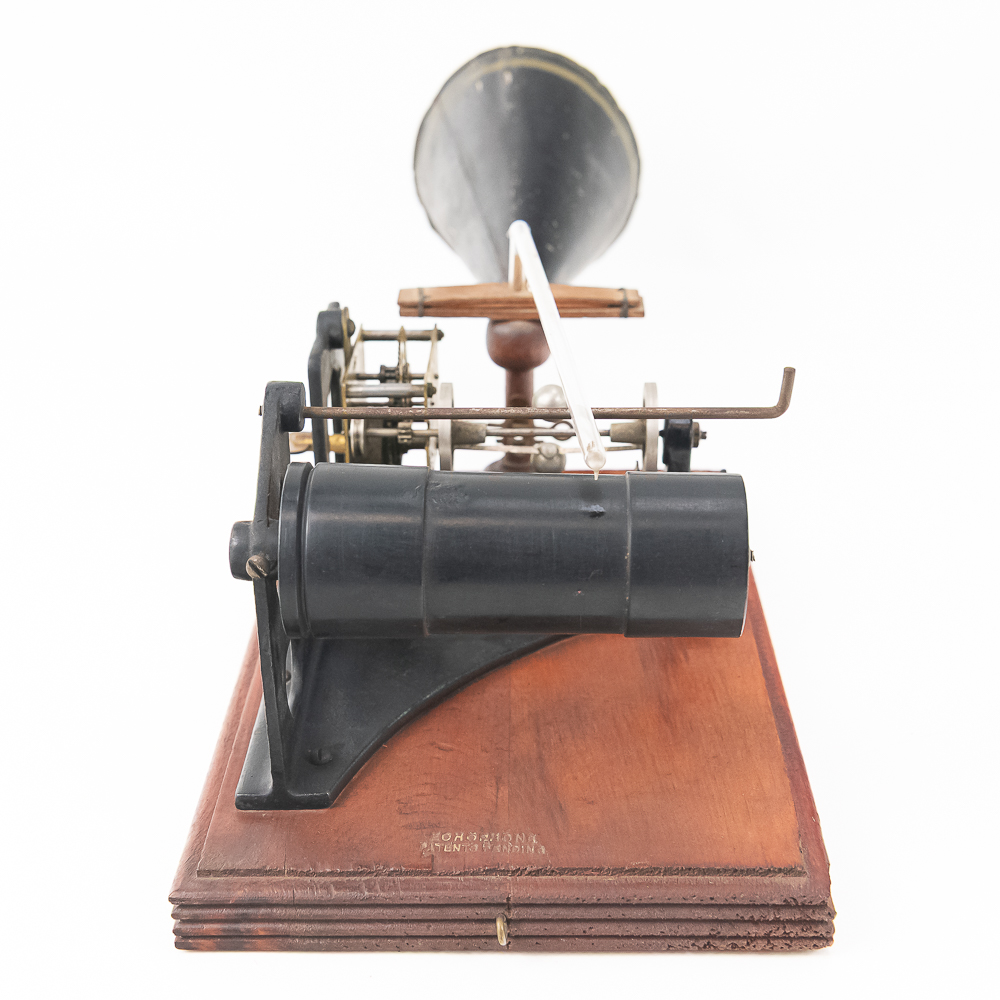
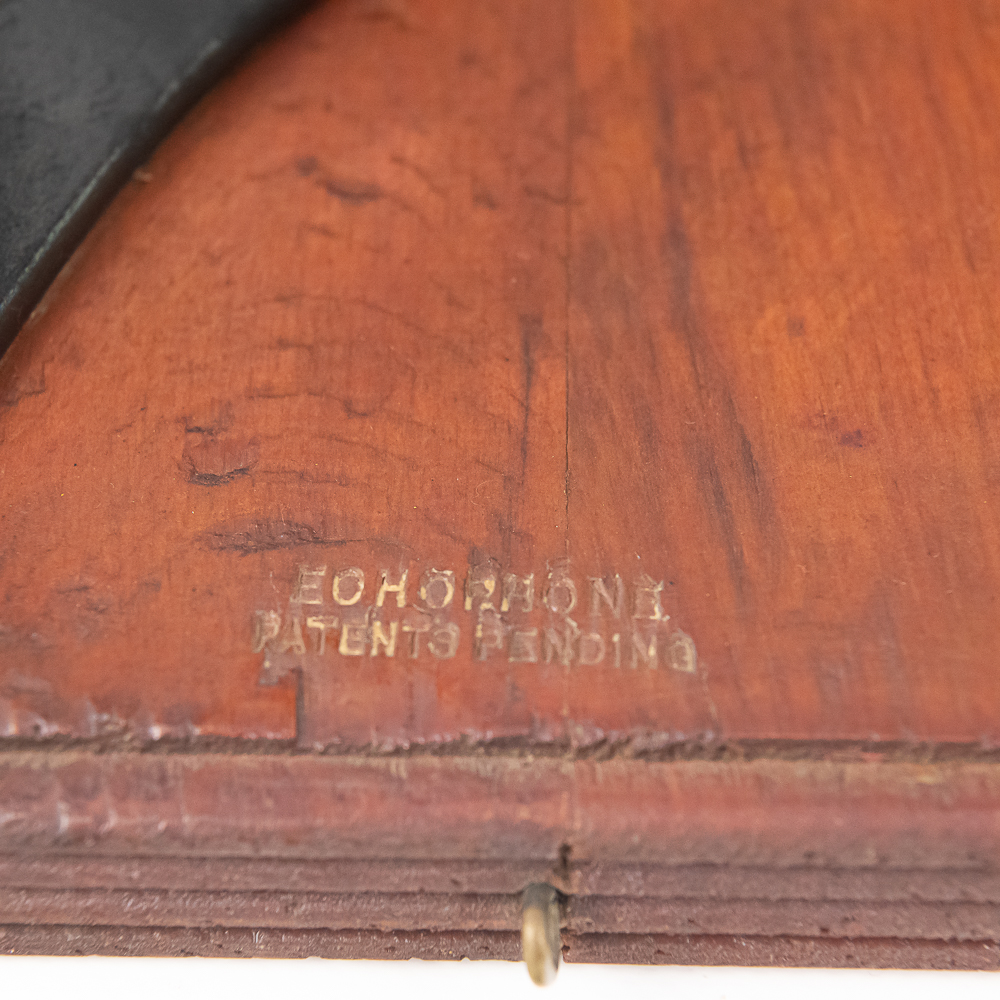
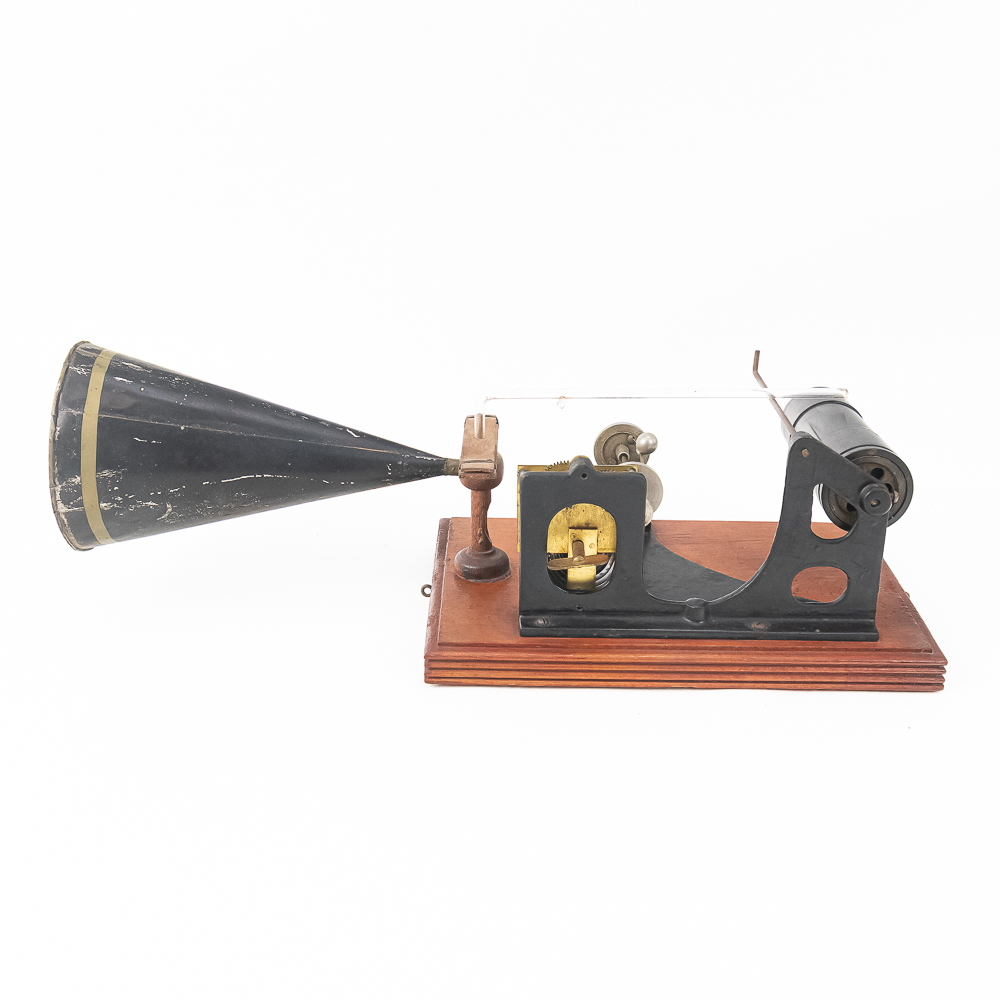
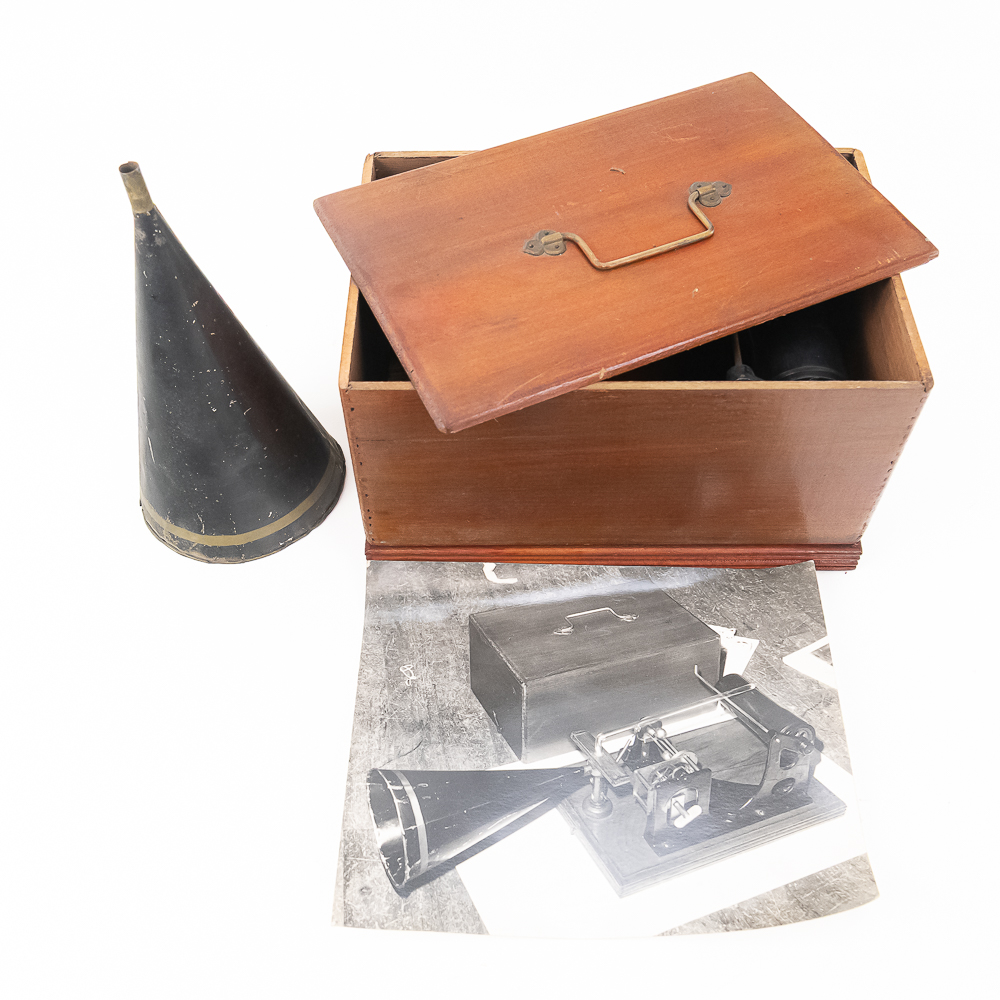
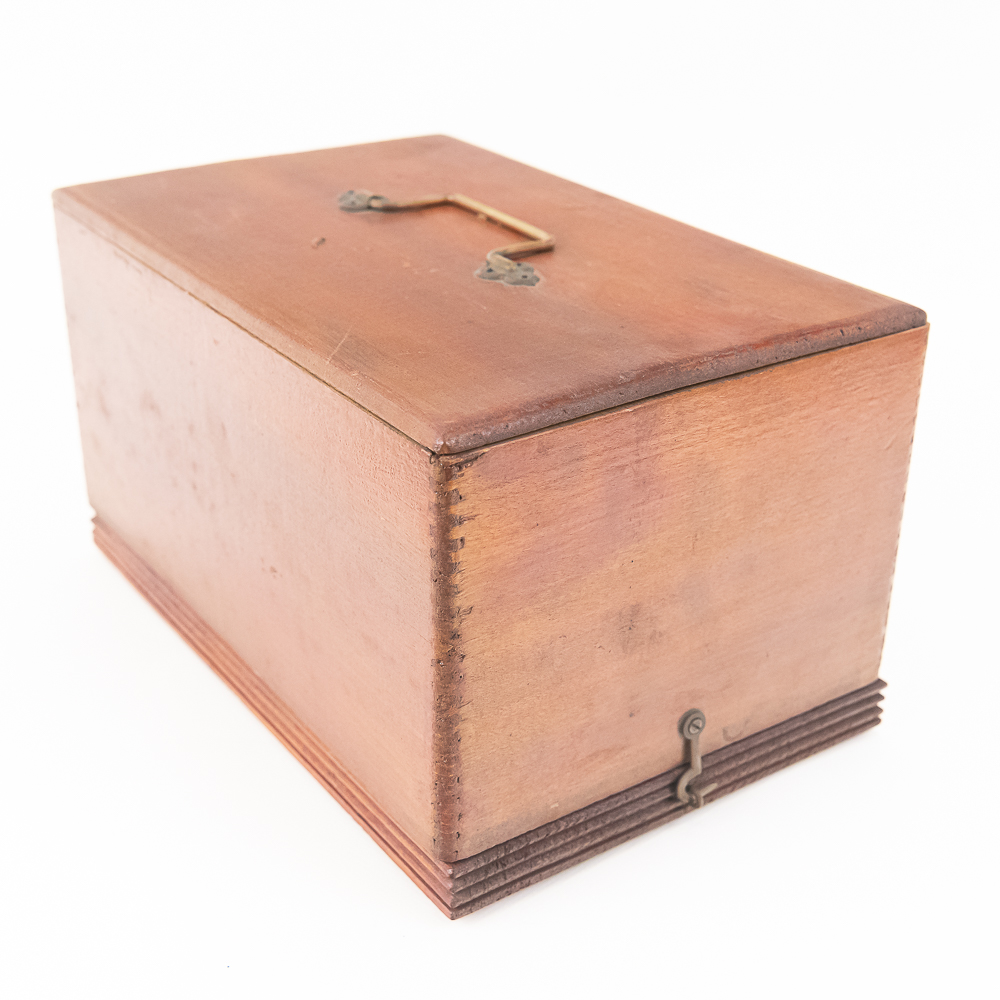
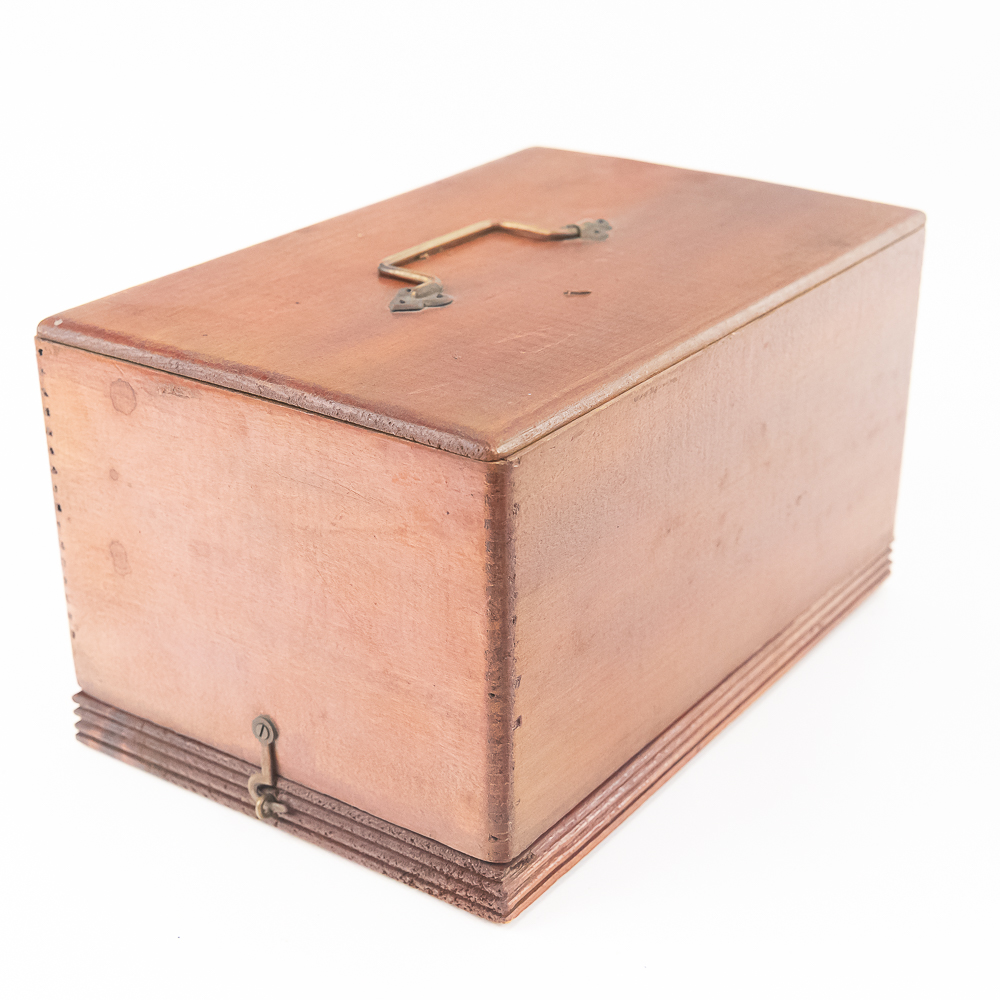
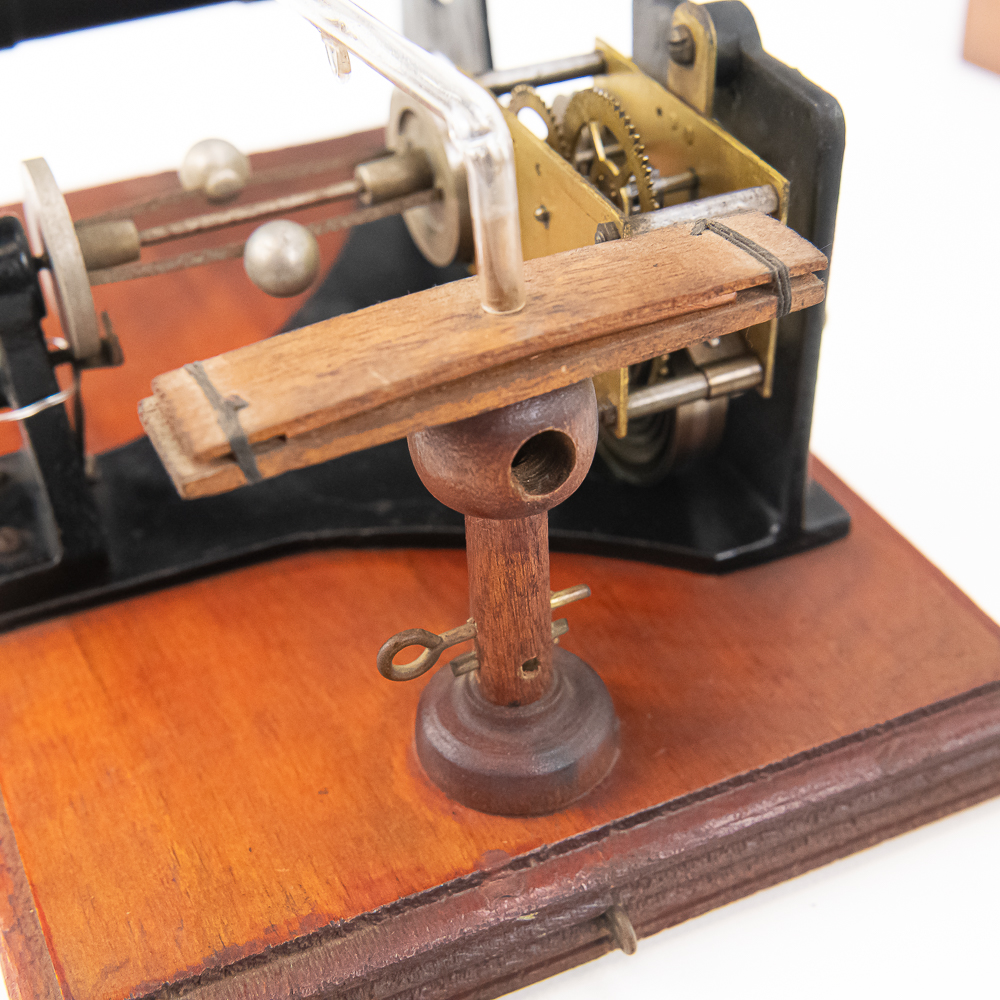
The Amet Echophone (originally introduced as the Metaphone) is one of the rarest and sought after cylinder talking machines in the world. Invented by Edward Hill Amet of Waukegan, Illinois, and patented on November 20, 1895, it was designed as a highly affordable ($5 to $10) alternative to expensive Edison and Columbia models of the mid-1890s. The Echophone utilizes a single, delicate, pivoting one-piece glass tube with a glass stylus formed directly onto its tip. The glass arm rests loosely on a unique sound-transmitting clamp. This clamp consists of a flattened piece of rubber tubing wedged between two small, rigid wooden sticks. Unlike standard phonographs that rely on a mechanical feed-screw to move the reproducer across the cylinder, the Echophone’s lightweight glass arm is completely free-floating. It is pulled laterally across the wax cylinder solely by the spiral thread of the record groove itself. The free end of the rubber tubing connected directly to listening tubes or a small horn. The Echophone was manufactured for roughly only one year (around 1896–1897). The Columbia Phonograph Company quickly filed a massive patent infringement lawsuit against Amet’s operation. Columbia won the suit, forcing the company to cease production immediately. Under the terms of the legal settlement, all remaining unsold inventory and manufactured parts had to be surrendered directly to Columbia. Because production ceased almost immediately by litigation, only a few original Amet Echophones survive today. This example has the gutta percha mandrel and original horn. The wood base is stamped, ECHOPHONE PATENTS PENDING. The glass rod is intact with a good tip. The motor winds and runs. Overall in VG original condition. Comes with wood lid. Measures 10.675” wide, 7”deep, 5.875” tall with the lid on. From the Allen Koenigsberg collection.
Share this lot: