Old West & Native American Auction
Lot 1229:
Description
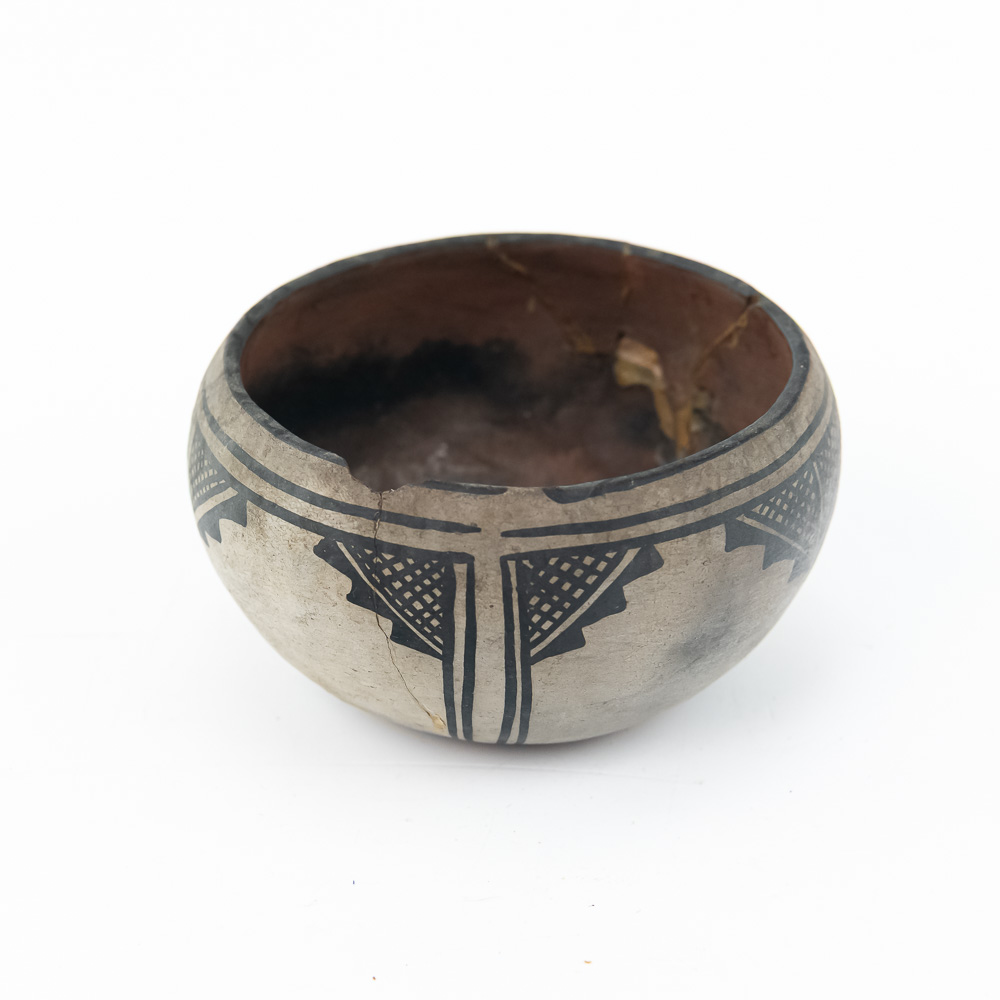
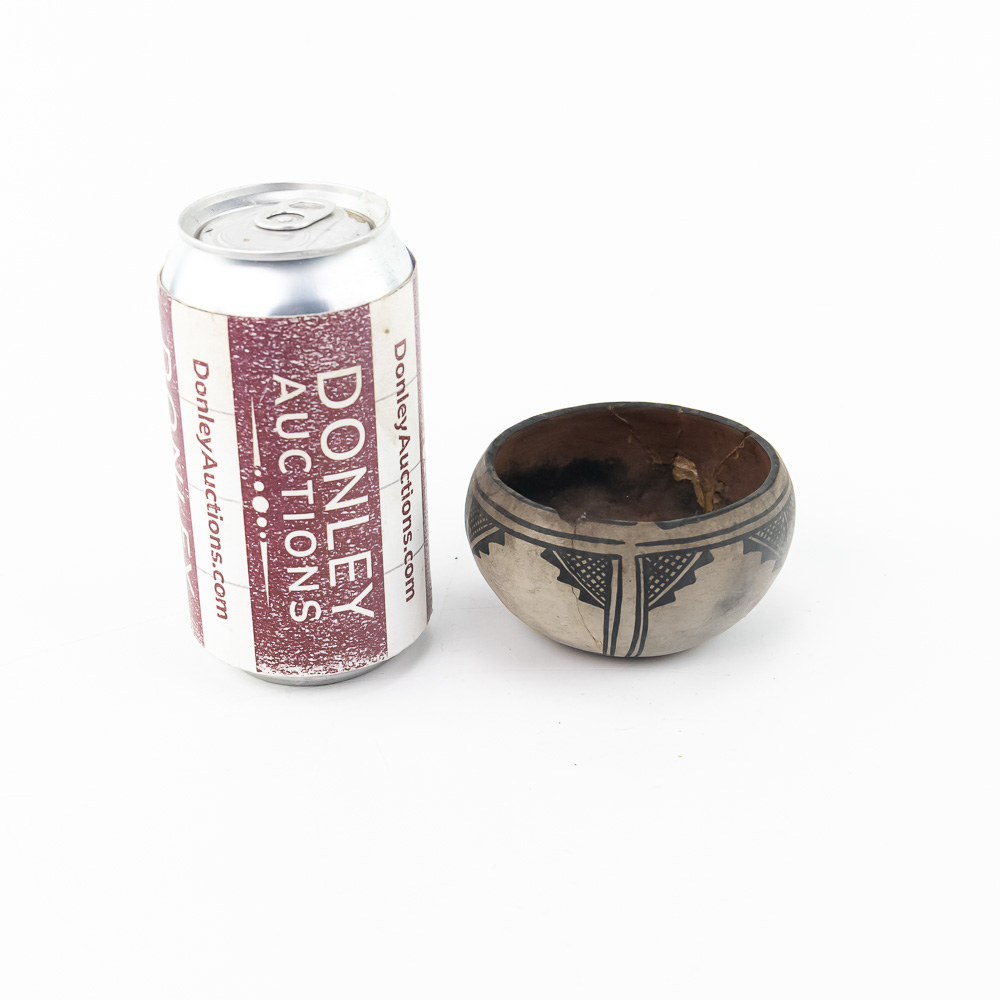
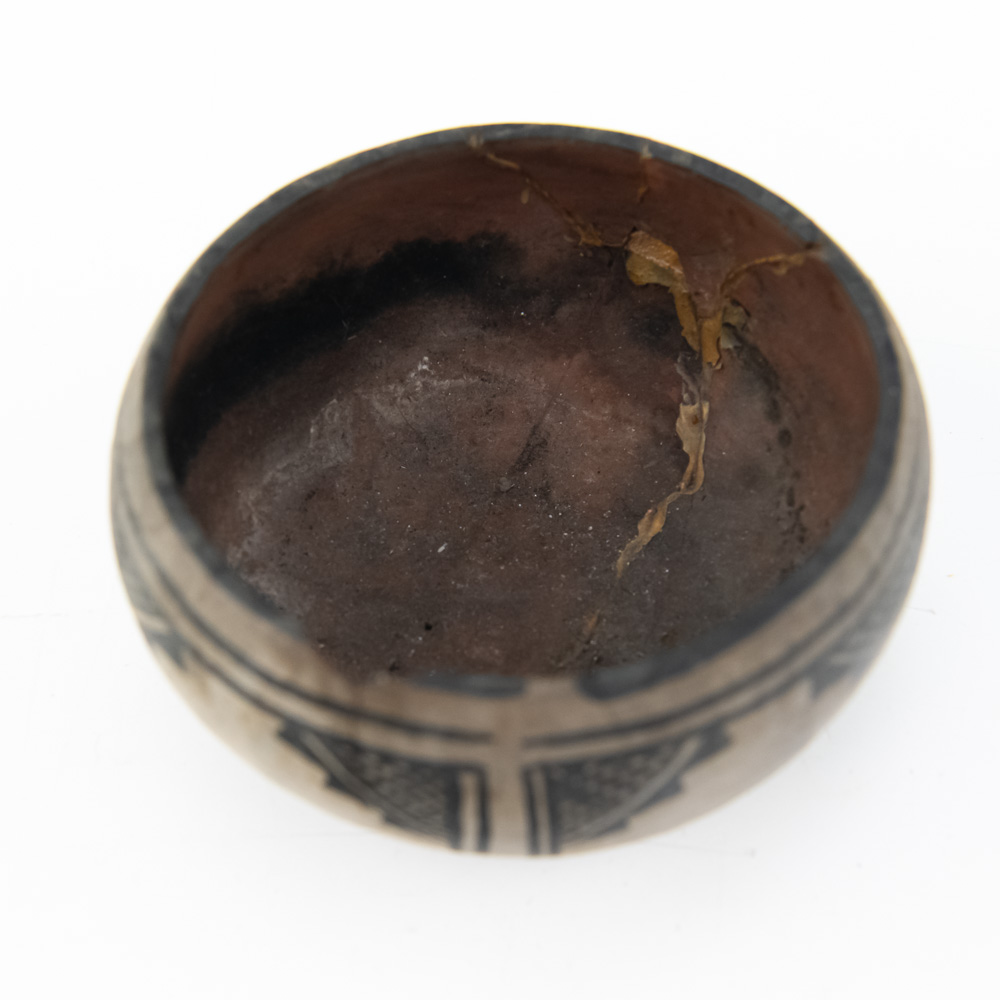
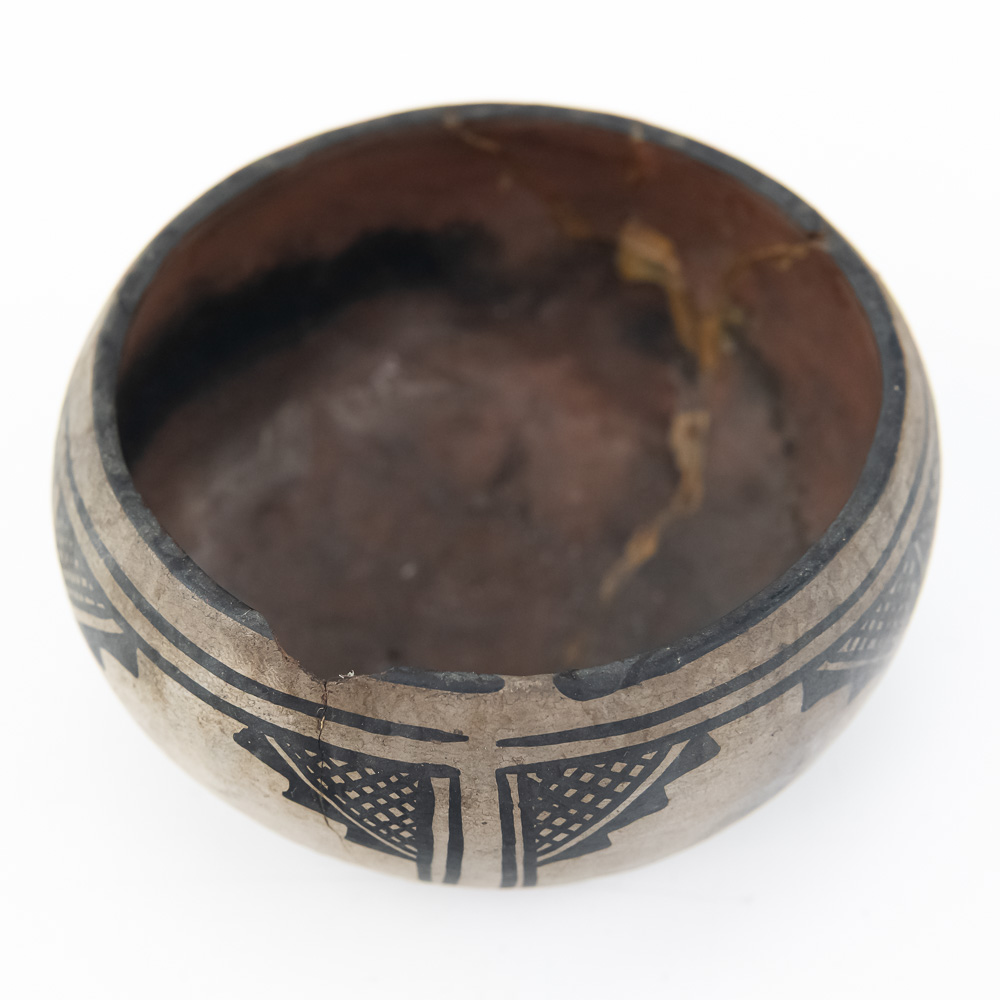
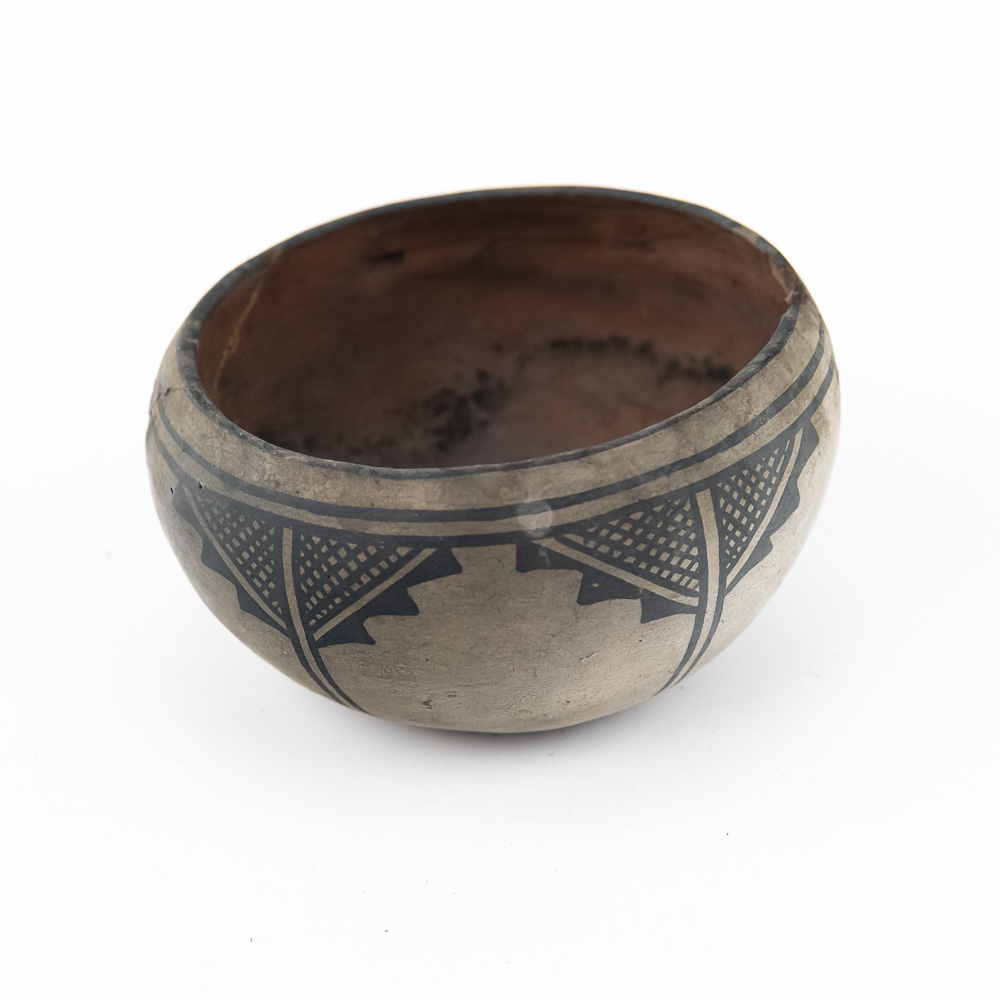
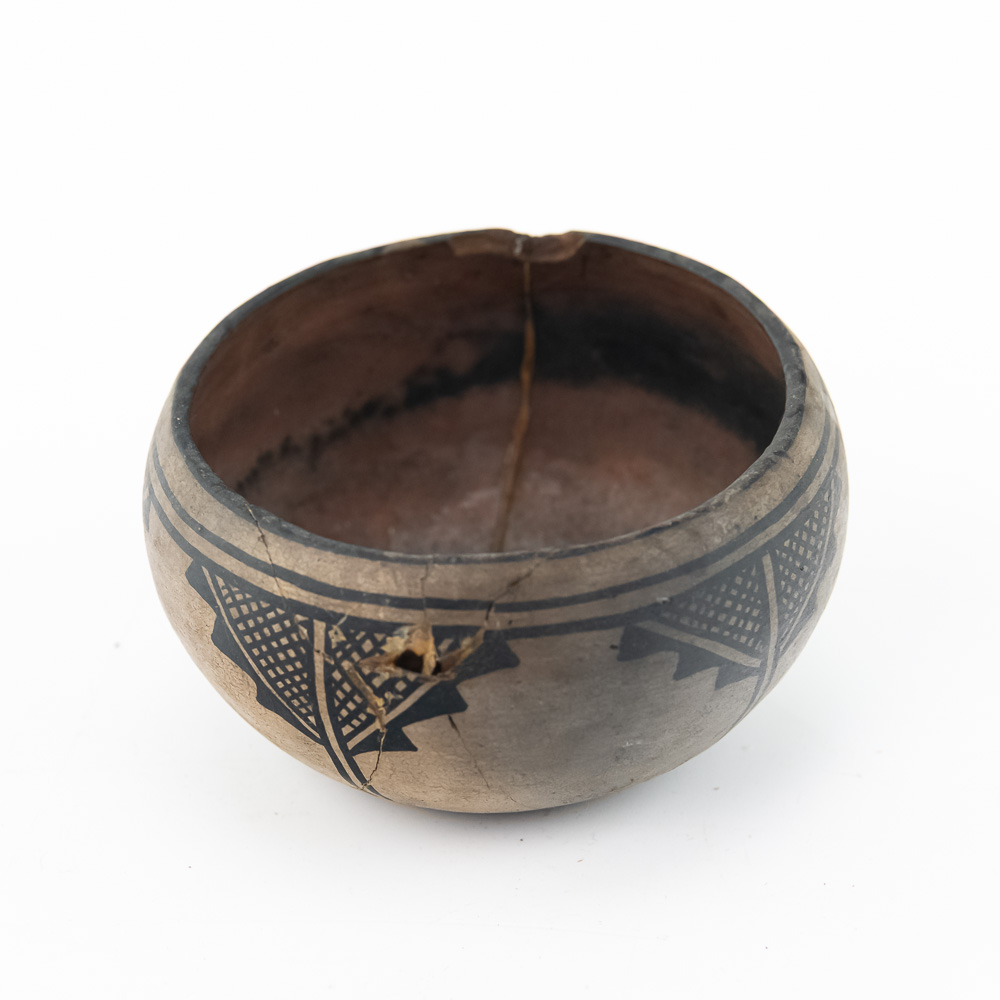
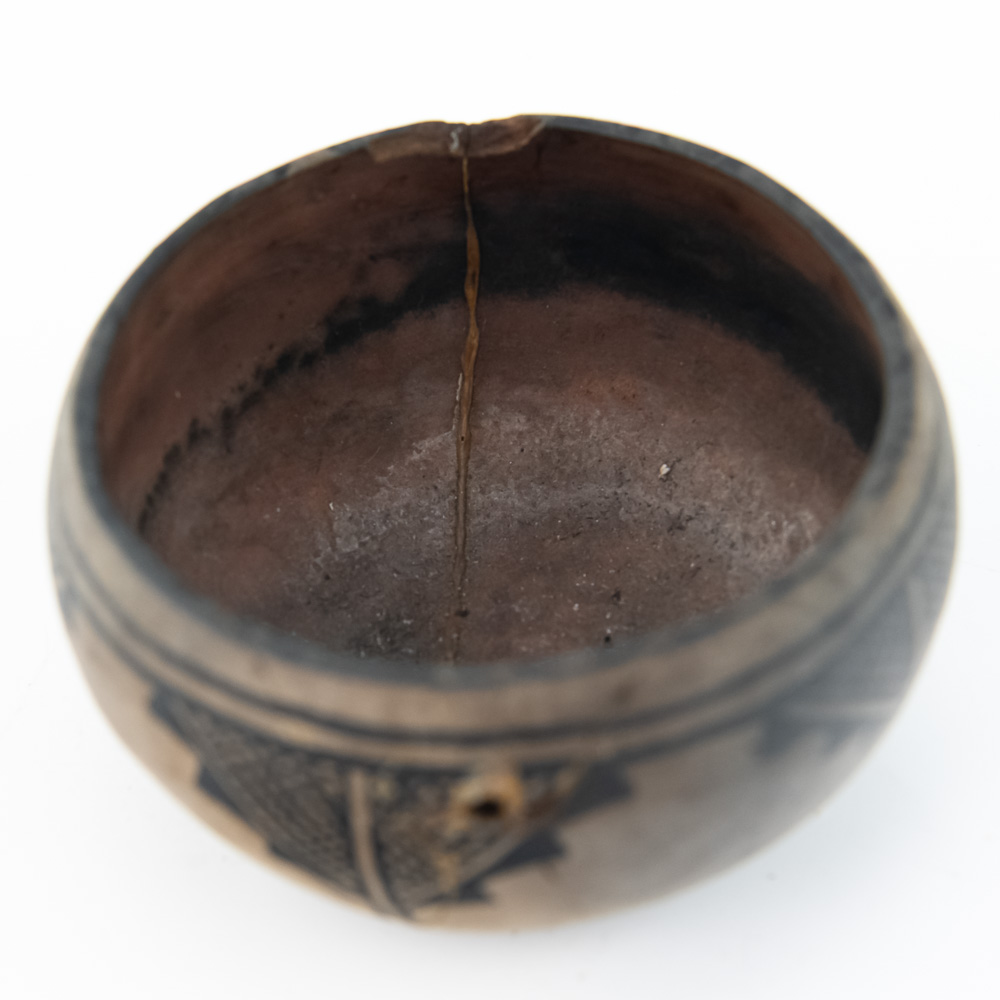
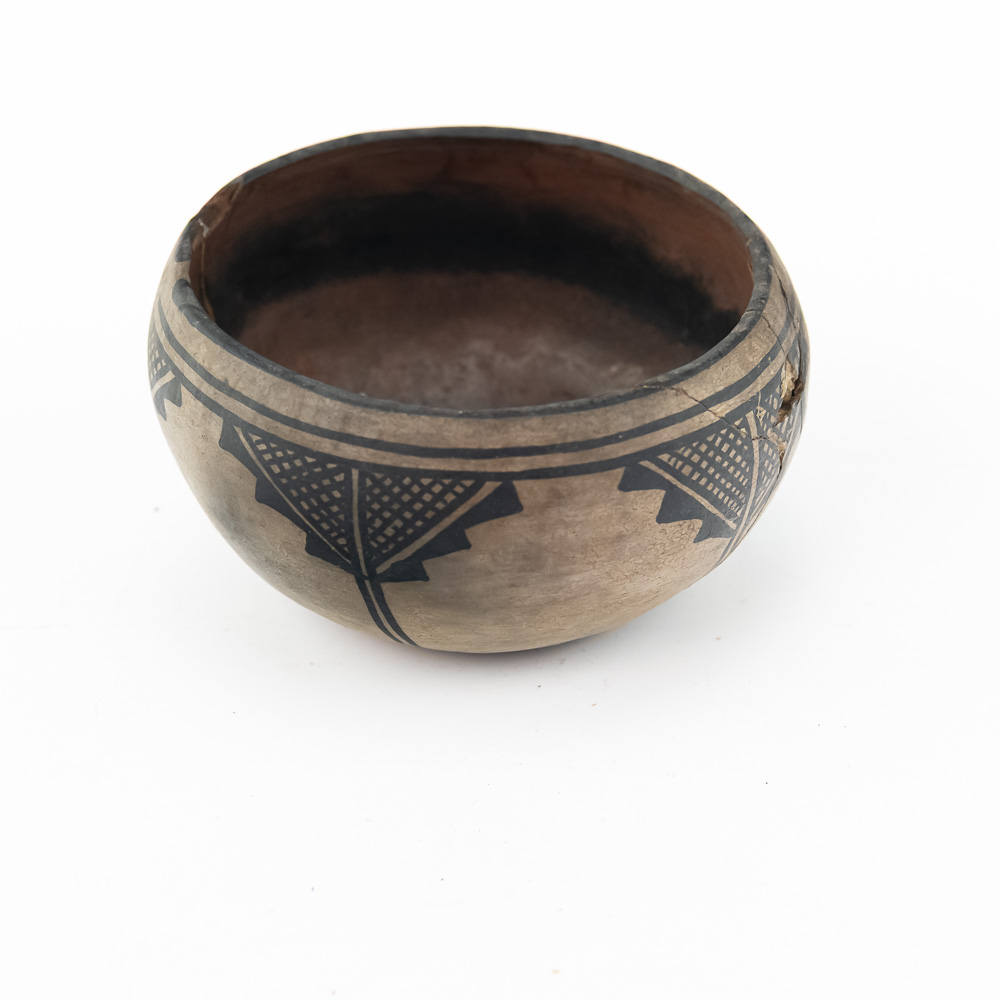
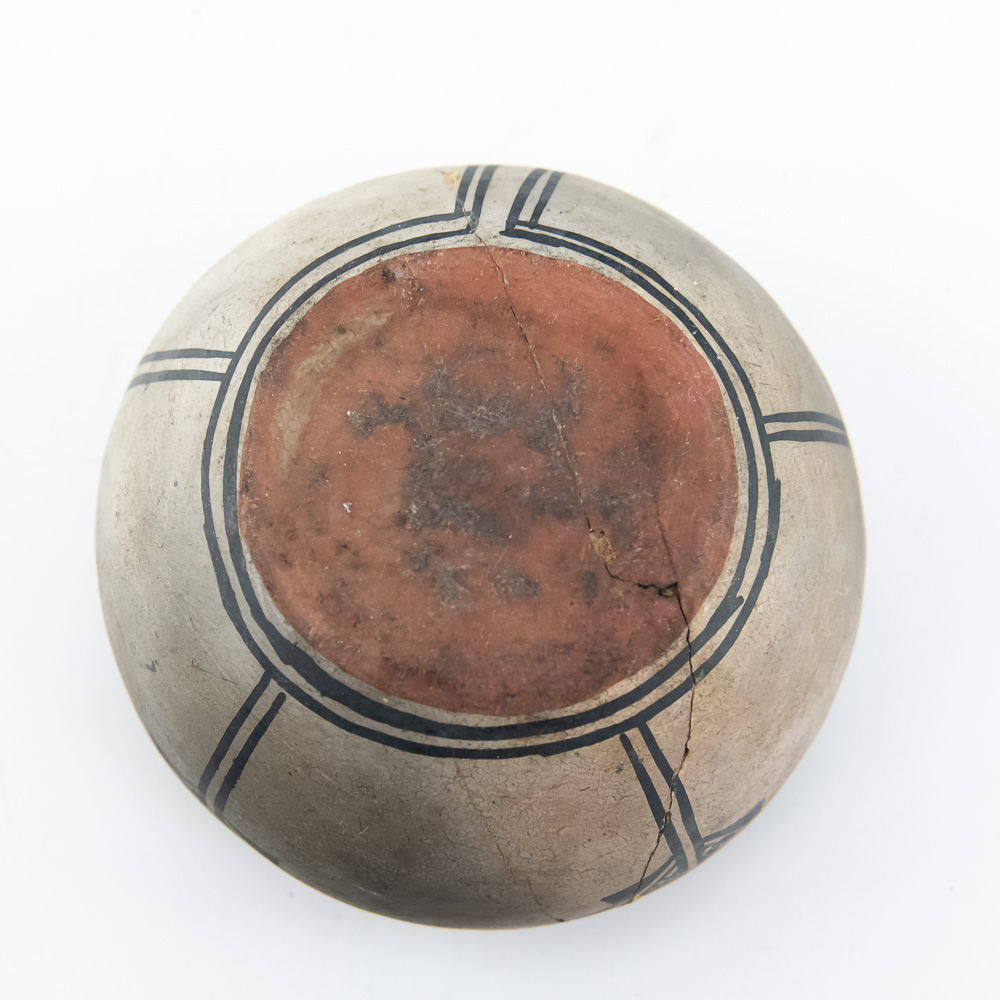
This small bowl, with its dark geometric mineral paint on a lighter (likely white or cream) clay slip, exhibits classic design elements characteristic of the Ancestral Puebloan (Anasazi) tradition of the American Southwest. The pottery style is known as Black-on-White, a tradition that flourished from approximately A.D. 500 up to the 1300s. The dense geometric patterns, specifically the stepped and hatched triangles bordering the rim, are highly reminiscent of types like Cortez Black-on-white (A.D. 880 – 1050) or Mimbres Black-on-white (A.D. 750-1150). While later Pueblo pottery (Post-1700, or “Historic”) often continued black-on-white designs, the overall feel, the native orange/red clay visible in the interior, and the specific geometric motifs suggest a strong possibility that this piece is indeed much older than the 18th century, potentially dating to the Pre-Columbian Pueblo II or Pueblo III periods (circa 900 to 1300 A.D.). This makes it an ancient artifact. The bowl is visibly damaged, featuring a major, old crack that runs through the body and base, which has been stabilized with what appears to be a dark, amber-colored repair adhesive. The rim is chipped and exhibits significant wear and surface soil, consistent with long-term burial and/or utilitarian use. H 2″, W 3.5″, D 3.5″. From the Native American display in Donley’s Wild West Town.
Share this lot: